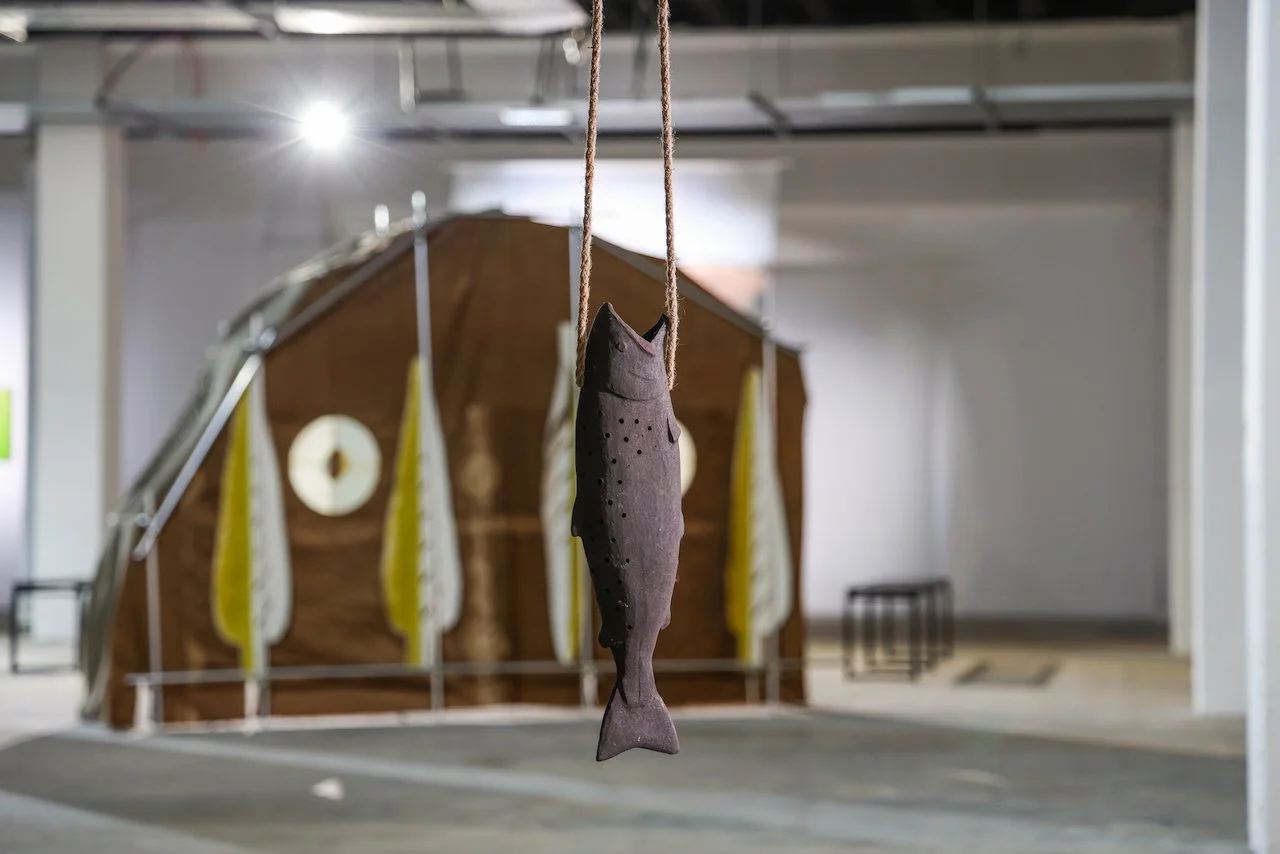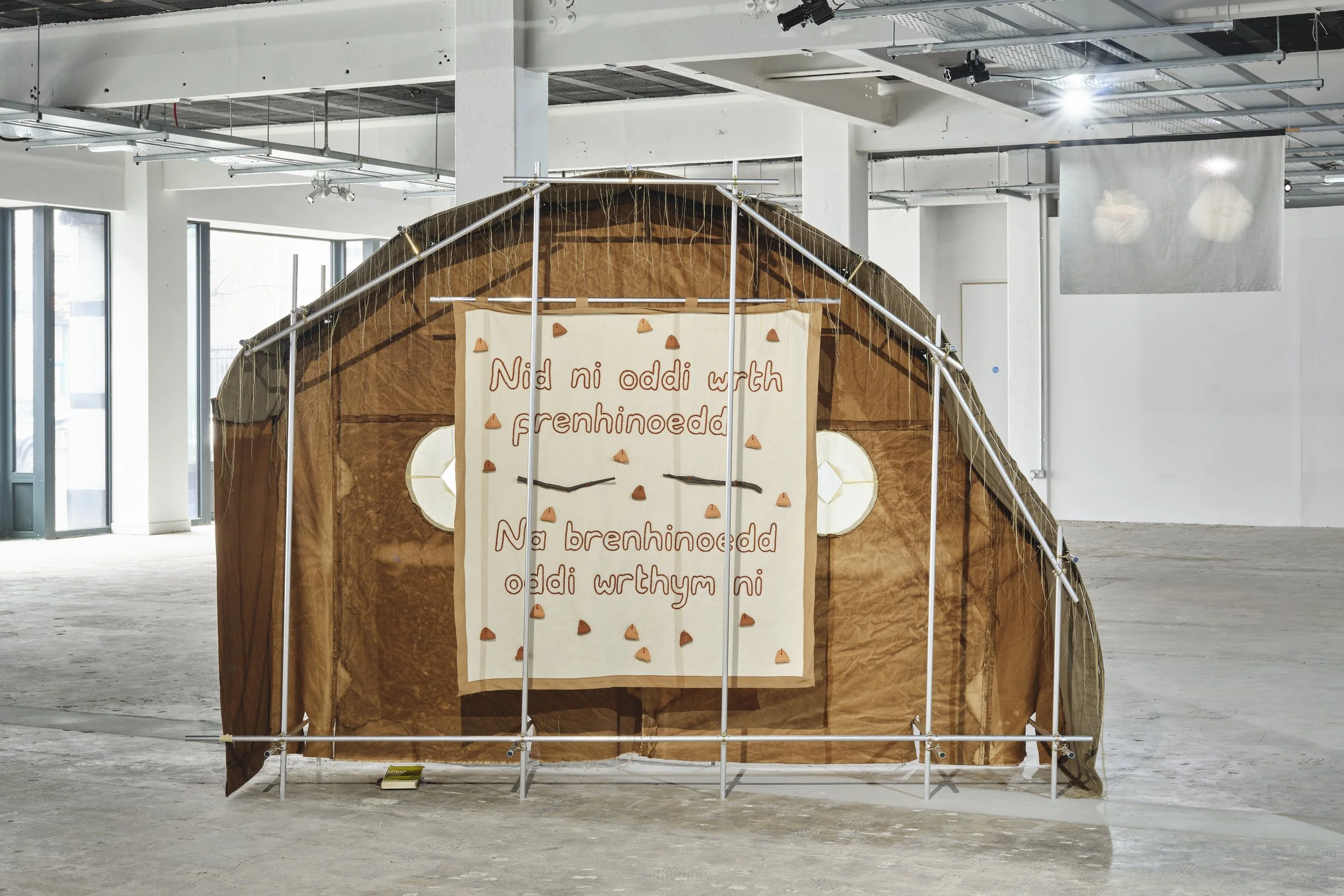
A Field Guide to the Offa’s Dyke/Canllaw Maes i Glawdd Offa, 2025. Dyed canvas, wool fabric, thread, aluminium tubing, metal fixings, cast pewter, and photographic print on textile. Photo: Ros Kavanagh
A Field Guide to the Offa’s Dyke delves into the artist’s experience of growing up in the Welsh borders with dual Welsh-English identity. The installation explores the psychogeography of the dyke in the present time, alongside speculative reimaginings of the borderlands and dual identities as a space of creative potential as well as ambiguity. The installation draws on the form of Offa’s dyke, an ancient border earthwork which marks a distinct physical line across the Welsh borderland landscape. The Dyke was constructed in an uneven shape, with the bank much higher on the Welsh side, to allow long views into the landscape. The wool textile piece reimagines a slogan painted on a farmhouse inhabited by members of the artist’s family. The new version, in Welsh, reads ‘Nid ni oddi wrth frenhinoedd, na brenhinoedd oddi wrthym ni’, which means ‘Not We From Kings, Nor From Us Kings’.
The audio reflects on visits to sites on the dyke, combined with reflections on family and the borderlands.