
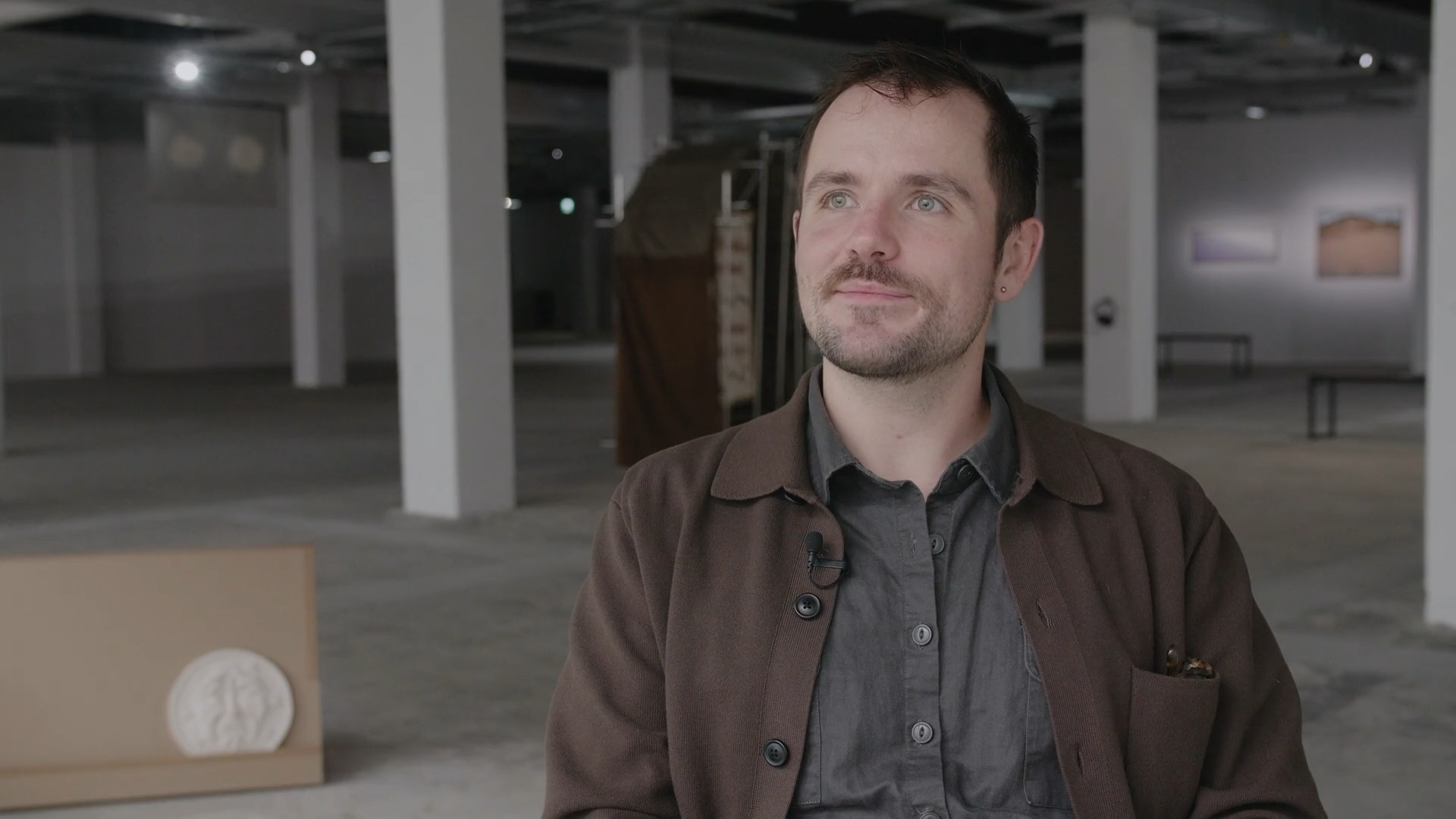
Artist Insights: Peter Tresnan | TULCA 2025
Artist Insights is an ongoing interview featuring artists participating in TULCA Festival of Visual Arts. Through short filmed conversations, the series offers insight into artistic processes, thematic concerns, and the ideas shaping each edition of the festival.
Peter Tresnan
Peter Tresnan’s work concerns the internal worlds of queer people. In his process, he explores how time and space in these internal worlds are bent around notions of history, nature, and decolonization. His work begins with the thesis that queerness is a wilderness that is as much a part of nature as people are. From this departure, he is able to explore how memory, power, history, and affect inform the landscape; his work as the artist is to negotiate the relationship between figure and landscape. The images he creates bear witness to giants in jarring landscapes, atmospheres of smoke and memory, and figures emerging from or falling into abstraction. Making the work is a process of discovery, and its creation connects him to the worlds he is invoking. In this making, he seeks to understand the multidimensional spaces that queer people create and inhabit, visualising moments and time that are fleeting, guarded, and sacred.
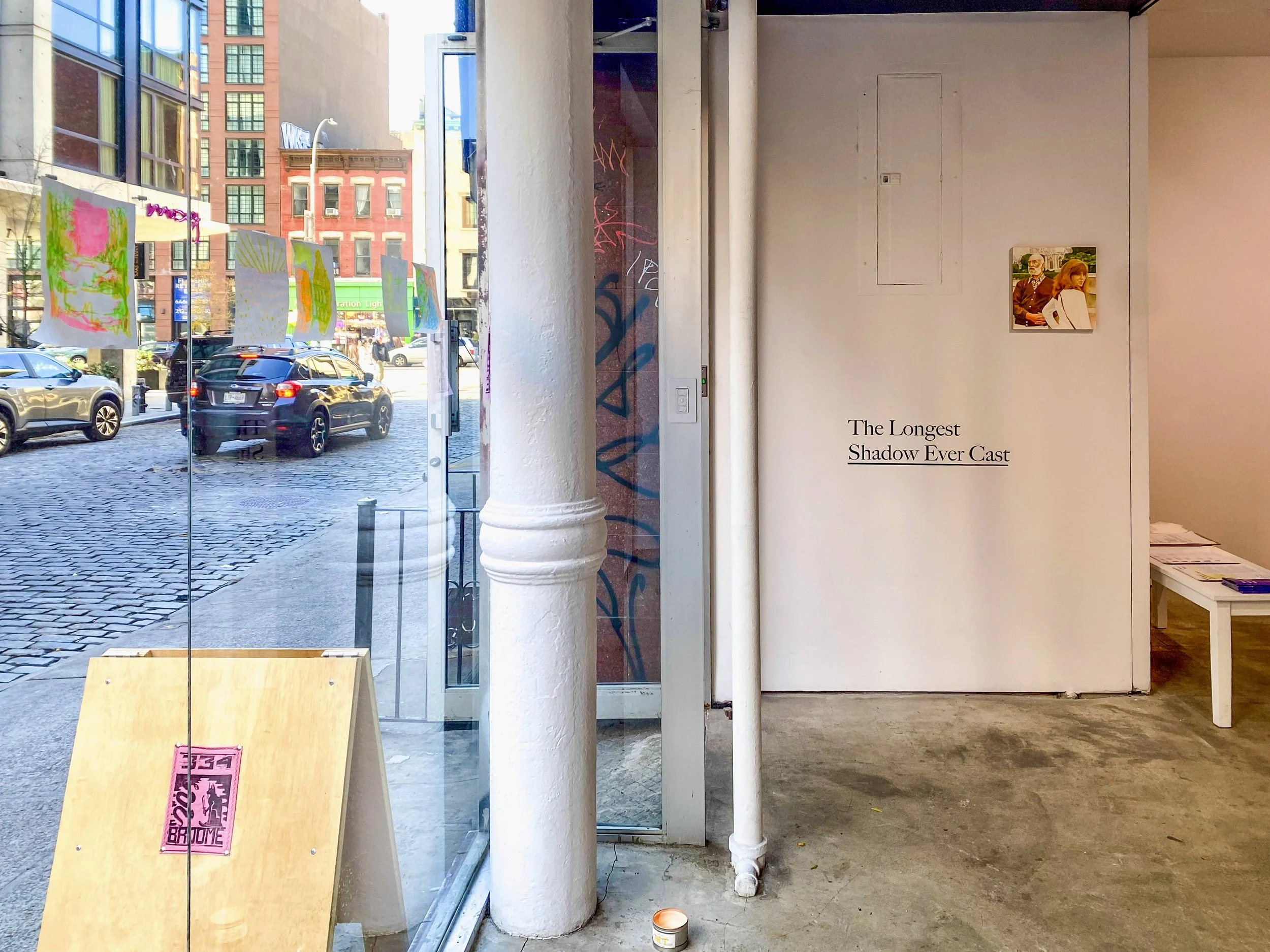
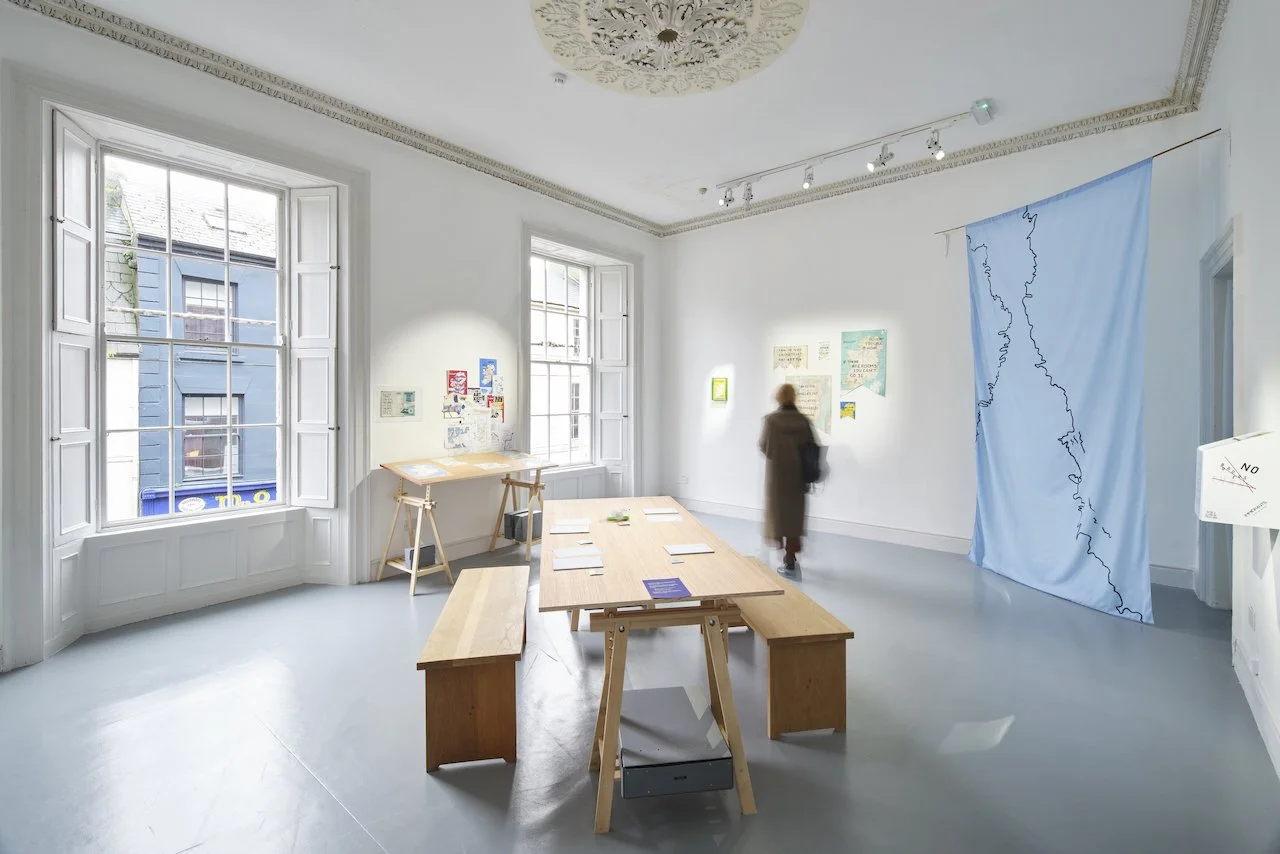
The Longest Shadow Ever Cast is a diptych presenting a singular figure emerging from the ocean. Their gaze is a puddle of emotions set against a vibrant sky and dark clouds, while their body moves purposefully toward the viewer. The vertically arranged diptych is divided horizontally: the upper half rendered in oil on linen, and the lower half an abstracted figurative drawing combining charcoal, acrylics, and spray paint on tulle. Across these media, the figure remains whole, uniting the two canvases. The paintings sit along an axis oriented 254° west-southwest, facing toward New York City. Their doubles are currently in New York, displayed at 334 Broome Gallery, facing Galway at 106° east-northeast. Together, the two diptychs form the poles of a transatlantic cross-section, enclosing a nearly 5,000-kilometre void between the two sites. Opposite the diptych, a single-channel video explores decolonial action and queer joy through the fluidity of bodies in movement, gesture, aggression, and sexuality.
Video documentation: Laura Griffin