
Caroline Mac Cathmhaoil
Caoimhín Gaffney
Mair Hughes
Emily Joy
Seán O’Riordan
Durre Shahwar
Jess Zamora-Turner
Strange lands still bear common ground reflects on movement and connection. Drawing on ancient cartographic practices and Galway’s maritime history, the festival asks what it means to be an island with fluid ties to the wider world, especially at a time when people and communities are increasingly displaced and fragmented. This year’s programme brings together artists who position themselves and their practices within a relational context and whose work invites reflection on proximity and exchange. Each of the works shown are grounded in situated encounters with distinct cities, cultures, creatures, and landscapes. They draw attention to the residues that surface at points of intense contact, and propose new possibilities that might emerge when familiar boundaries are unsettled.
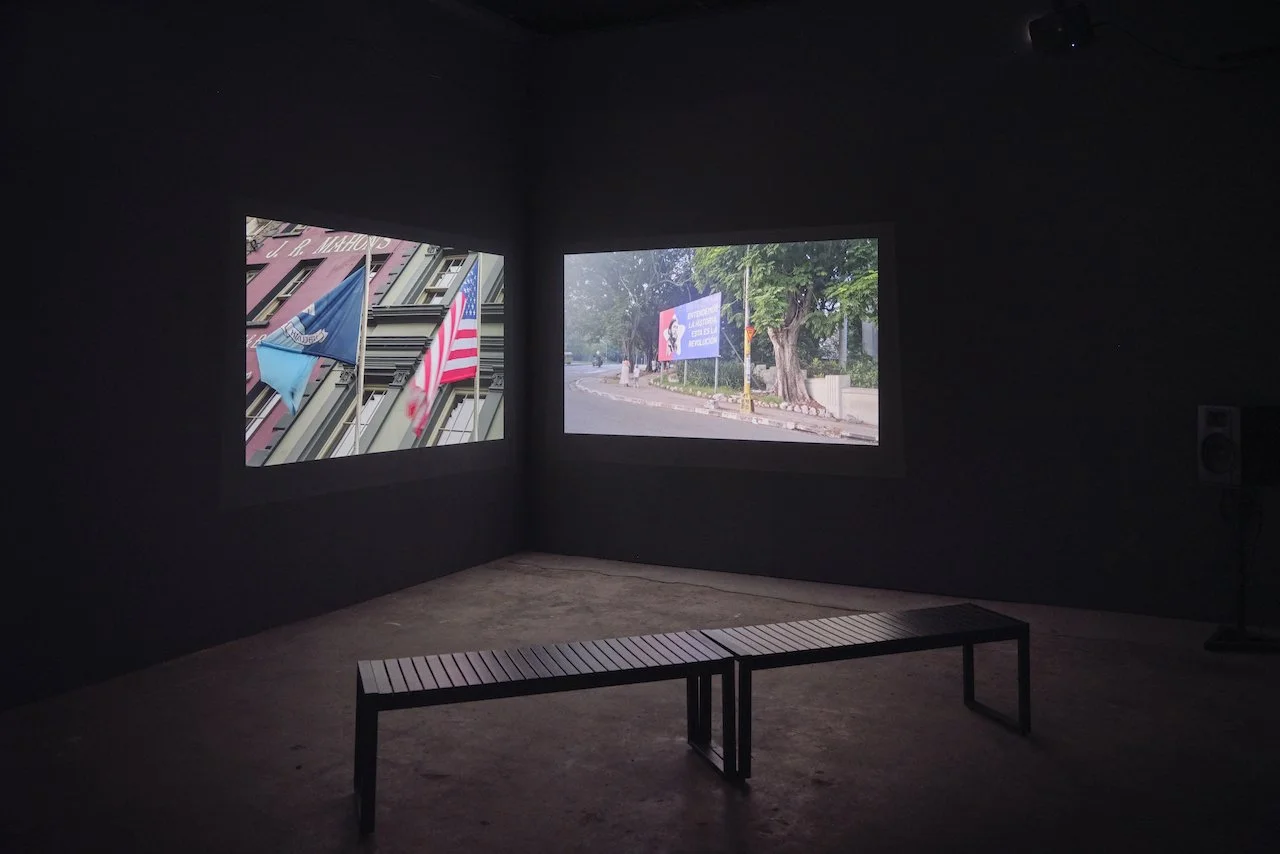
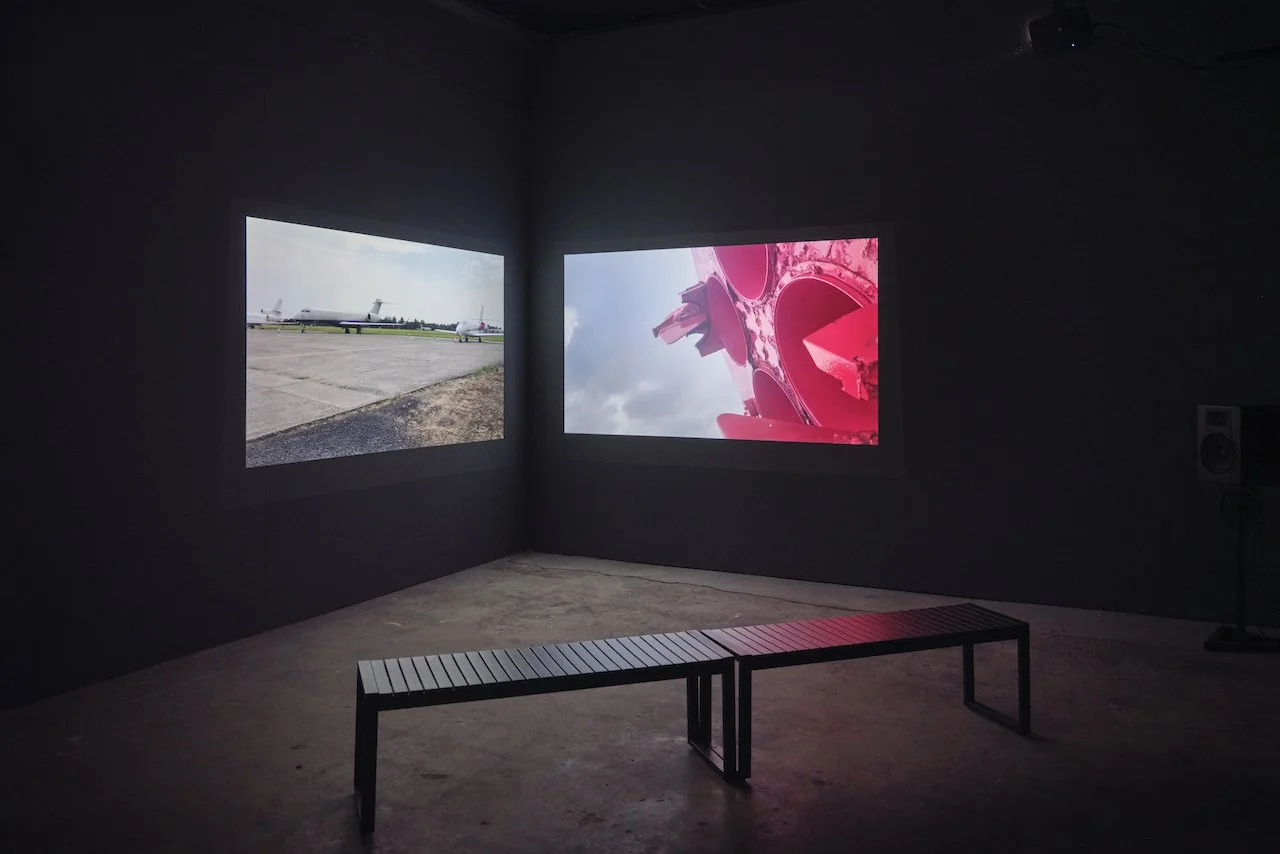
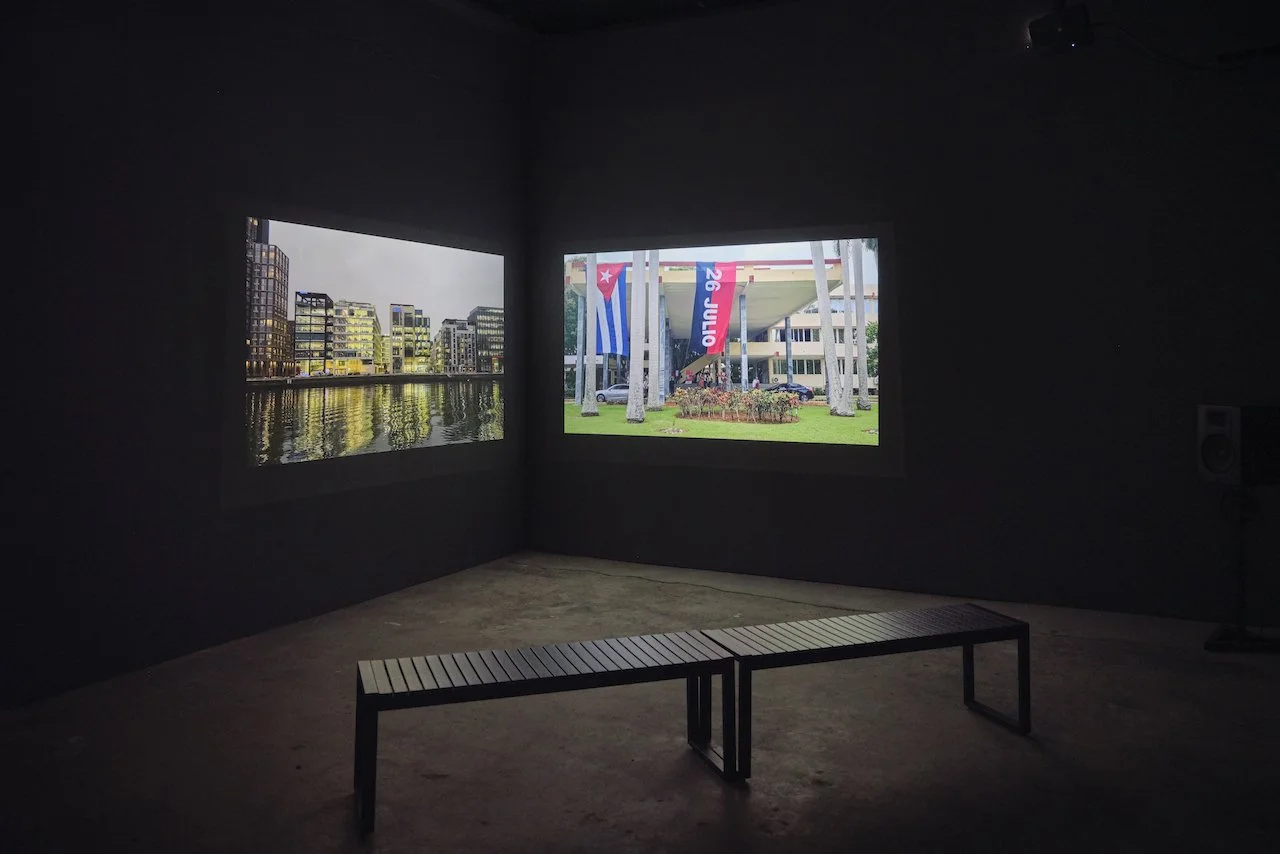
Caroline Mac Cathmhaoil
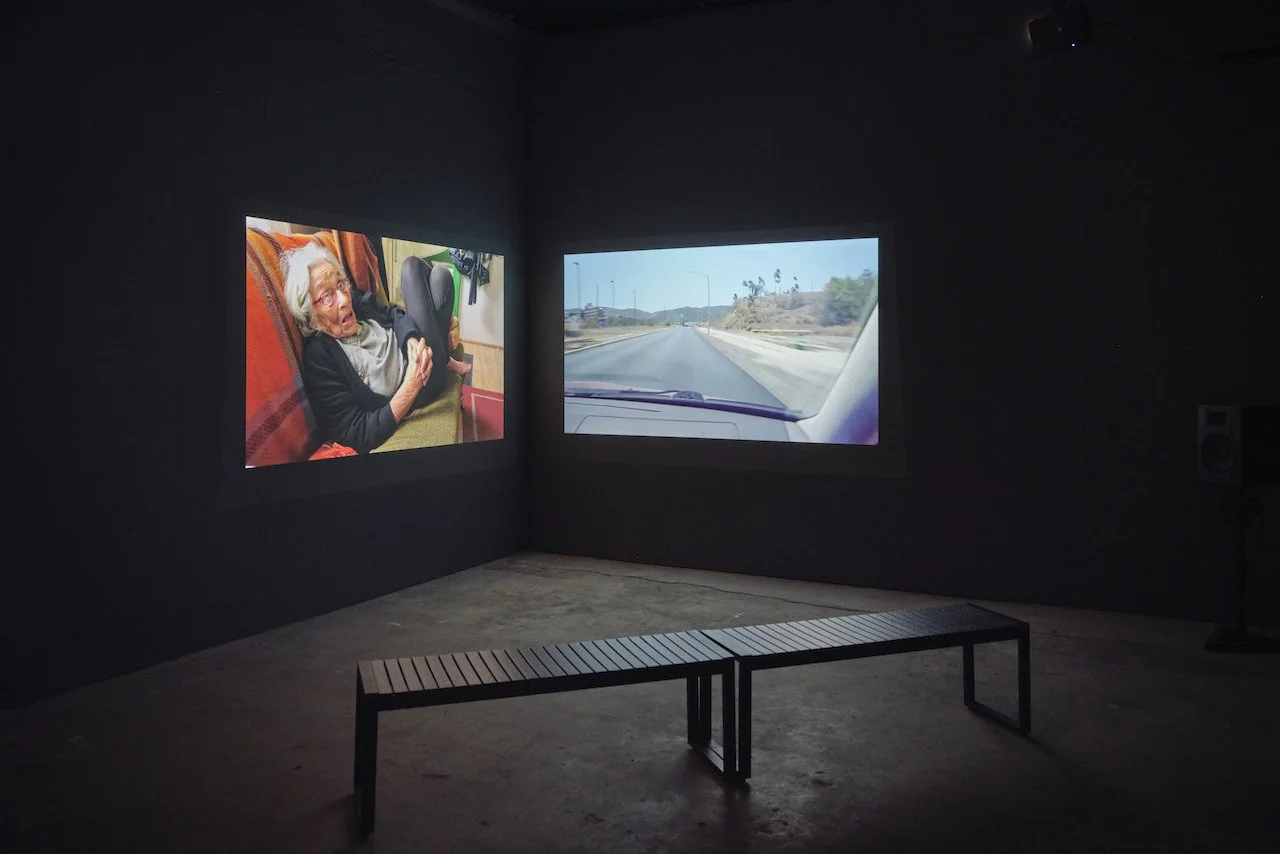
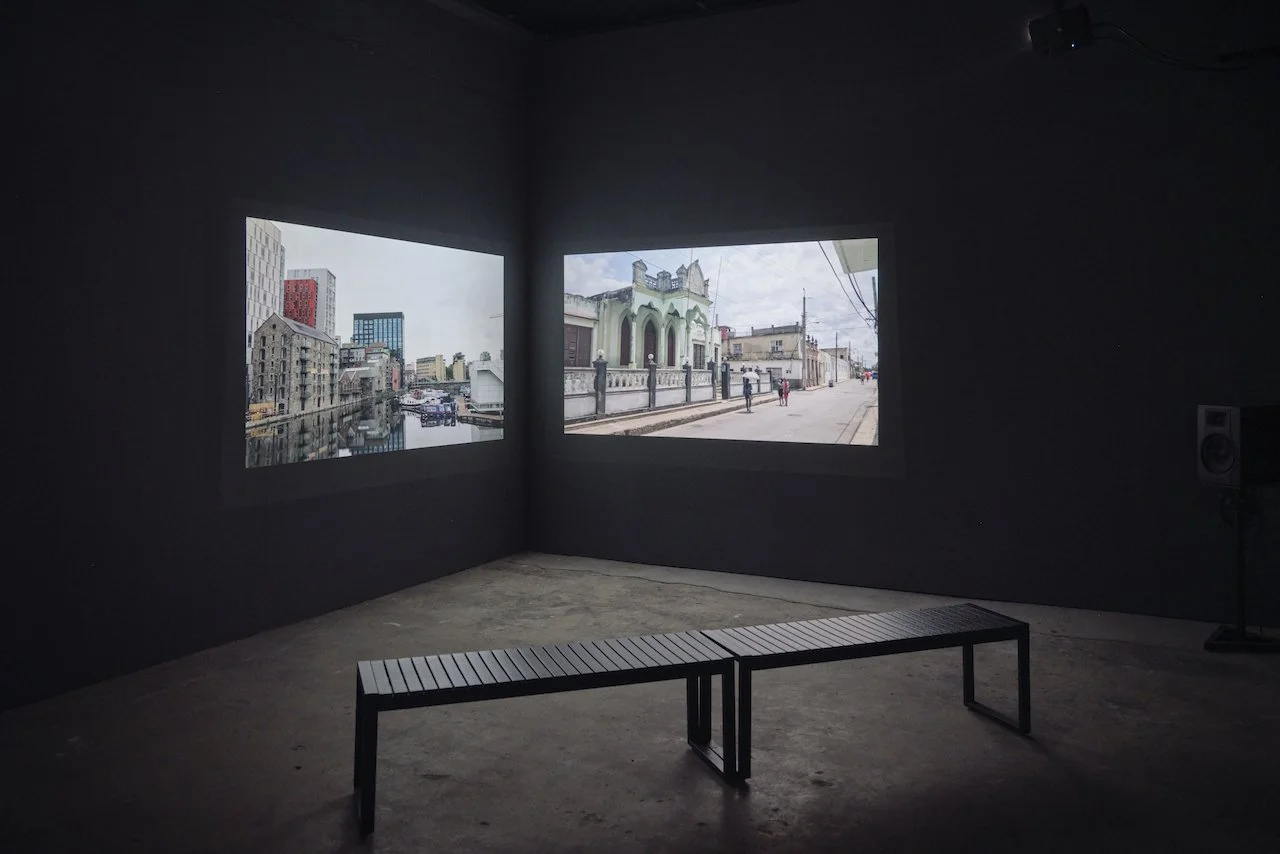
In the two-channel video installation, Mirror States, two disparate islands with intertwined histories are put in mirrored reflection. In the late early twentieth century, Cuba was described in Irish and American revolutionary and political circles as ‘The Ireland of the West’. Cuba, as it was then, was proposed as the model state from which a new Ireland could be imagined. The two islands also shared an exchange of revolutionary leaders: Ireland gave Cuba its charismatic grandson, Che Guevara Lynch. In return, Cuba gave Ireland the unusually sombre and austere Eamon De Valera.
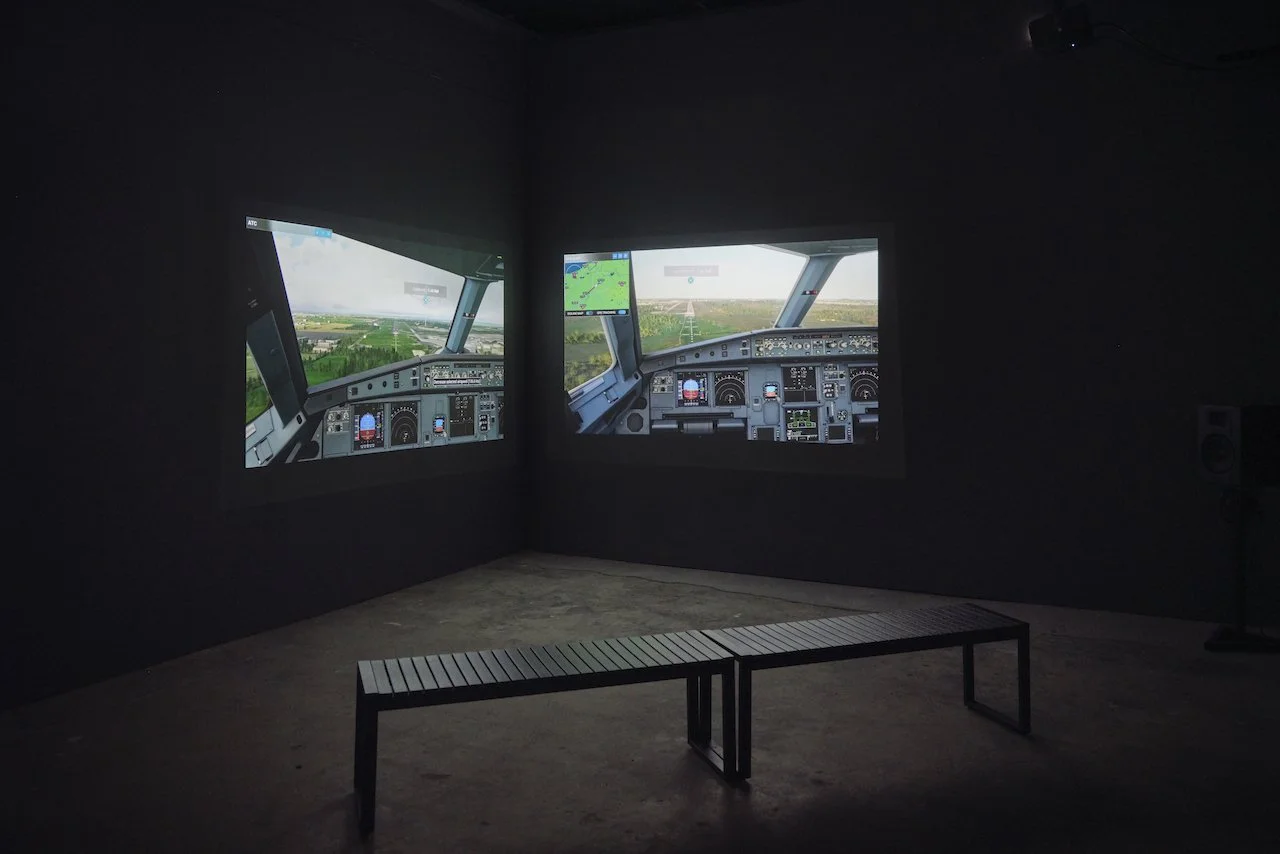
Cuba largely fulfilled the socialist dream of its uprising, with large plazas celebrating the country’s heroes. Dublin, in contrast, never developed a similar visual language of commemoration of its revolutionary triumph. The heroes of Ireland’s rising are hidden in small statues down exhaust-fumed back streets, hardly noticed, their dreams forgotten. Both islands seem to have forgotten their once common ground of political potential and comparison. Both islands now also share a strange secret United States Military Base in the west: Shannon Airport and Guantanamo Bay. The film, composed of footage shot between Havana and Dublin from 2022 to 2025 and interwoven with found material and online archives, asks what might be rediscovered when two histories, sometimes parallel, sometimes divergent, are brought into dialogue once more.
Mirror States, 2025
Digital Film
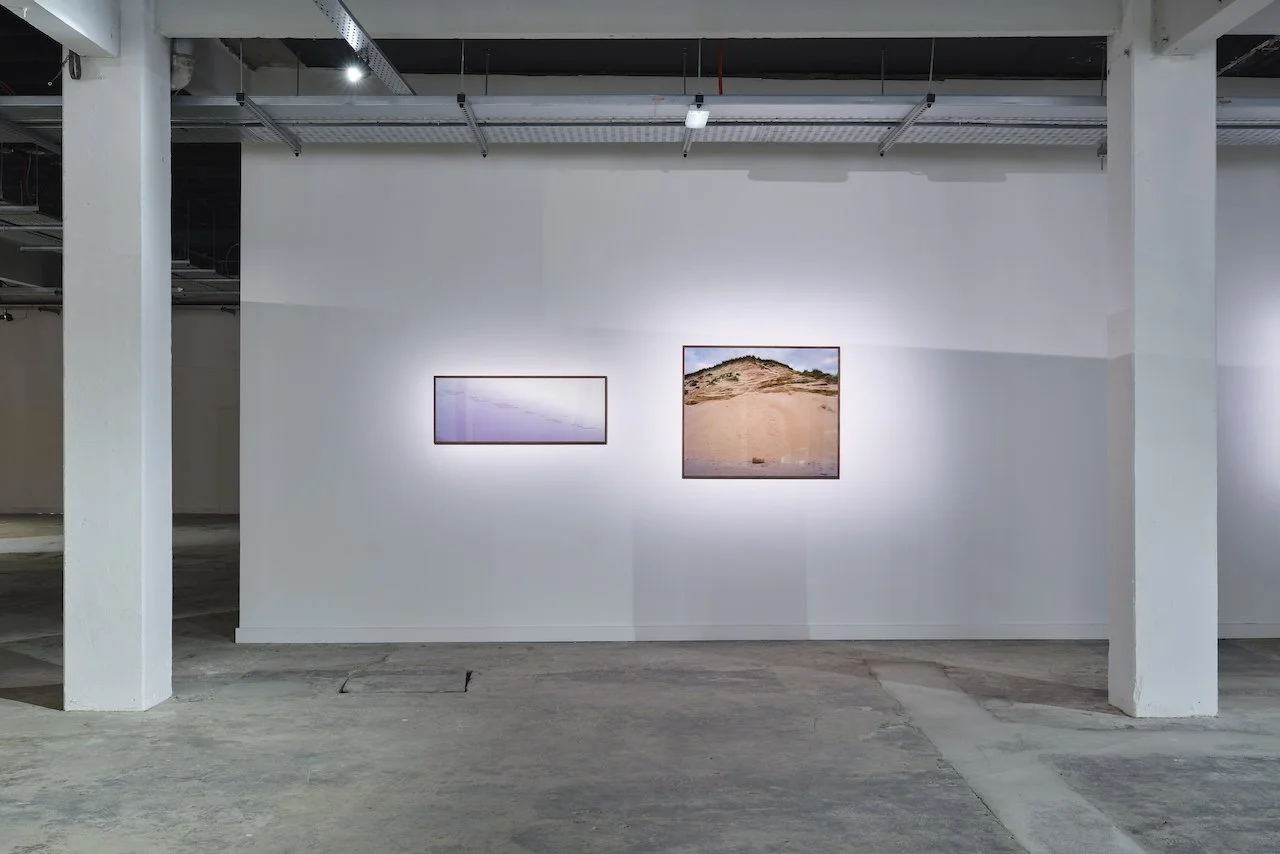
Caoimhín Gaffney
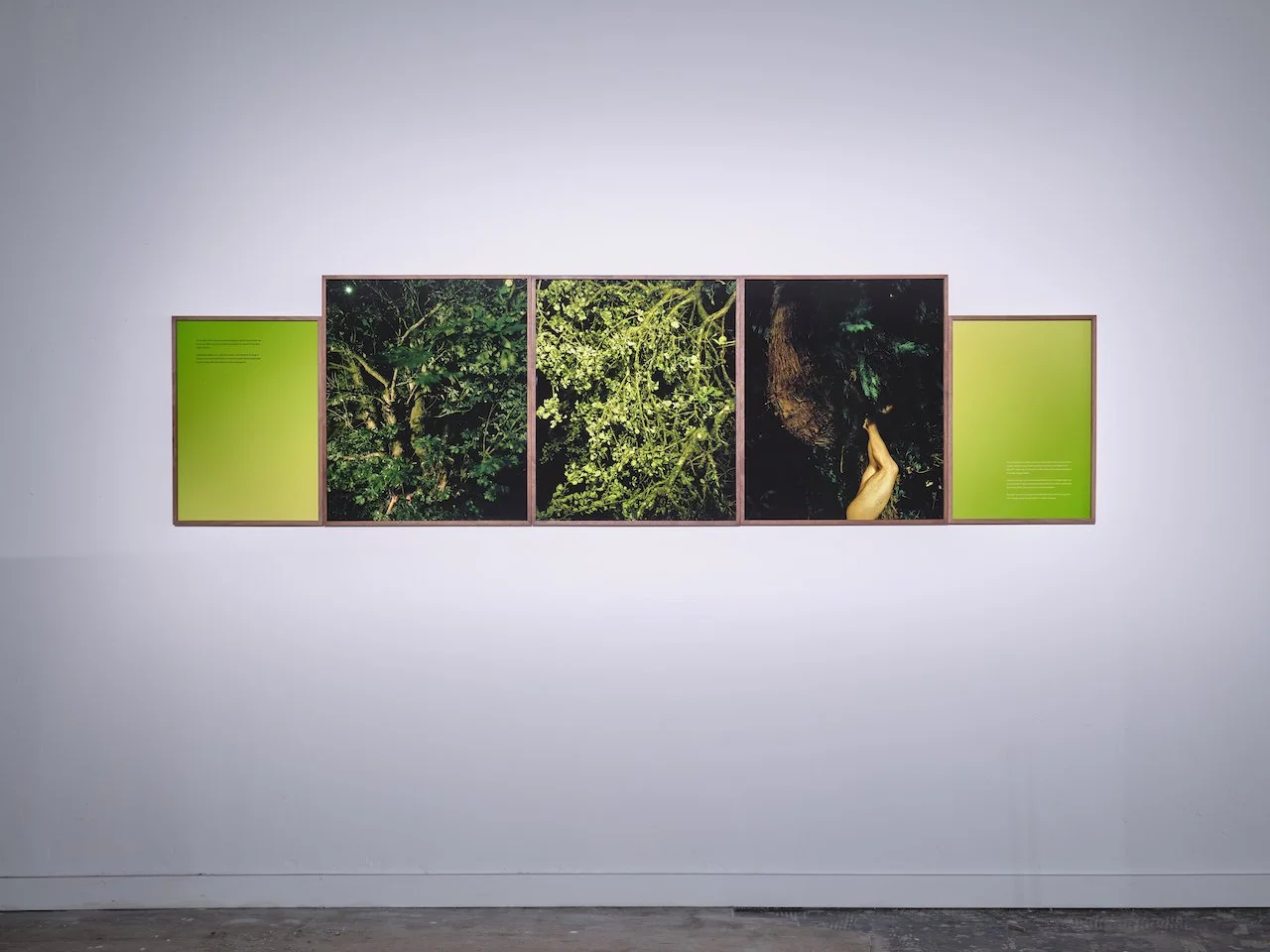
The works on view are drawn from All at Once Collapsing Together, a series of medium-format photographs that act as mirrors to the healing that the natural environment can offer. Text fragments, infused with climate anxiety, interrupt and reframe these scenes as fleeting and fragile. The series poses questions from an unnamed protagonist who considers the potential of the natural world as a site for recovery from trauma. Strands of queer thought are threaded through the series, unsettling conventions of nature writing and intertwining with fantasies of destruction and transformation. Together, these elements invite reflection on the traces we leave on the earth, and on the porous boundaries between body, environment, and disintegration.
And you leave the rest of yourself behind, 2024
A drop below the surface, 2024
16, 23, 36, 2024
Bright sun and cold shadows, 2024
A concentration of time: Pentaptych, 2024
All giclée printed on Hahnemühle archival photo rag paper
Mair Hughes, Emily Joy and Durre Shawar
The Borderlands/Y Gororau is a project led by Mair Hughes. The project explores the potency, plurality and value of Welsh borderland landscapes, and personal experiences of dual identity and Welshness. Emily Joy, Mair Hughes, and Durre Shahwar create work which reflects on sites across the Welsh borderlands, bringing together collaborative research and individual responses through their practice in writing, photography, sculpture and site-specific exploration.
Mair Hughes
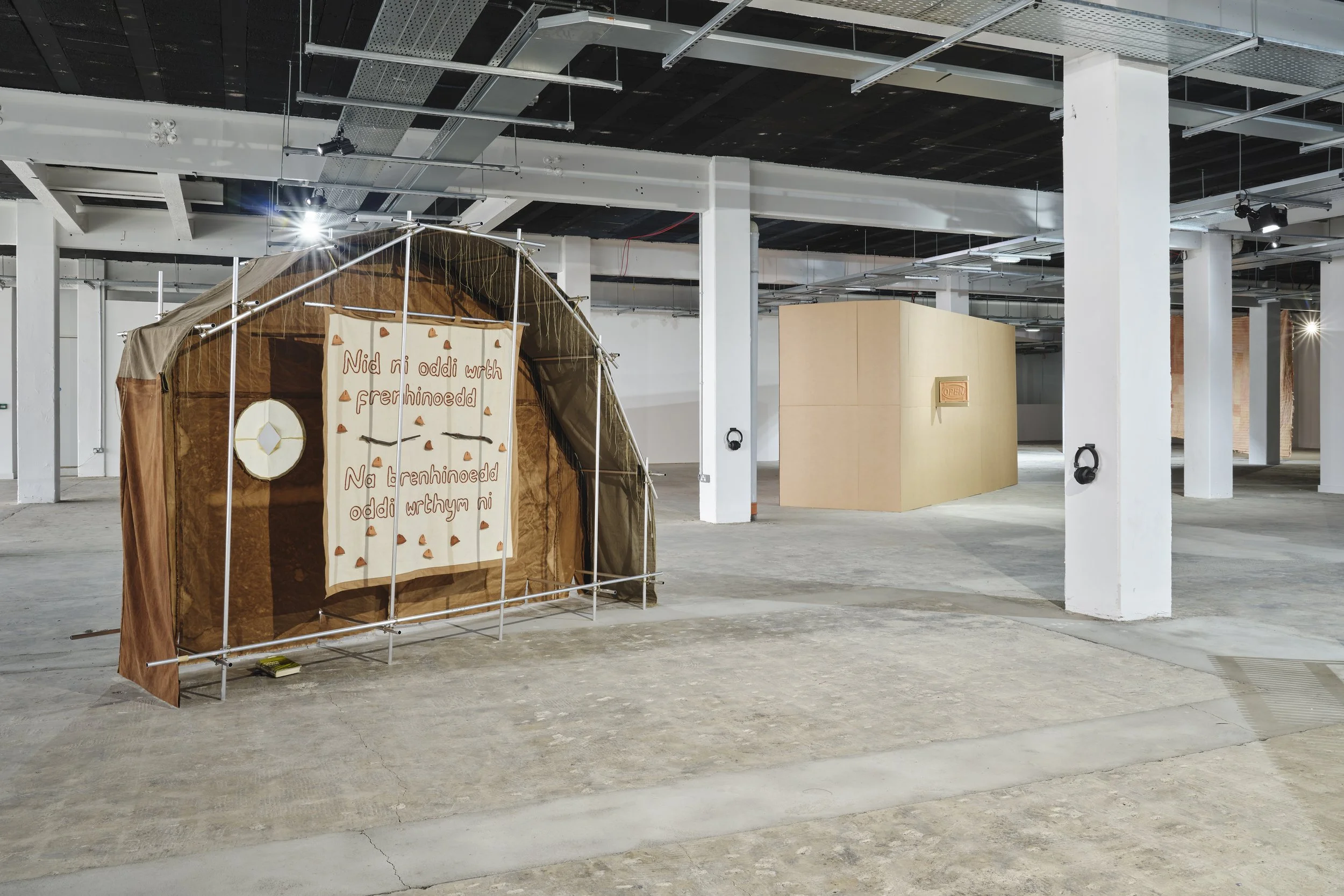
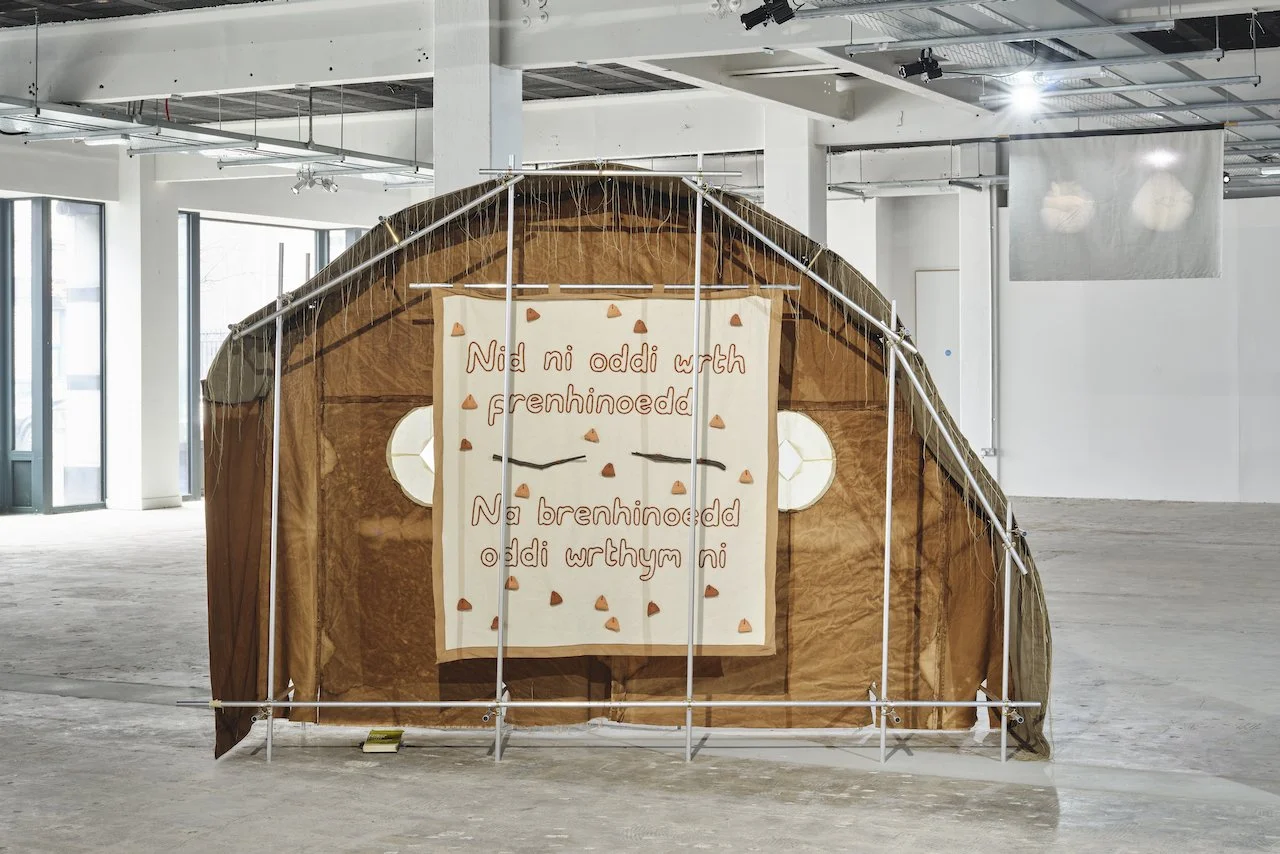
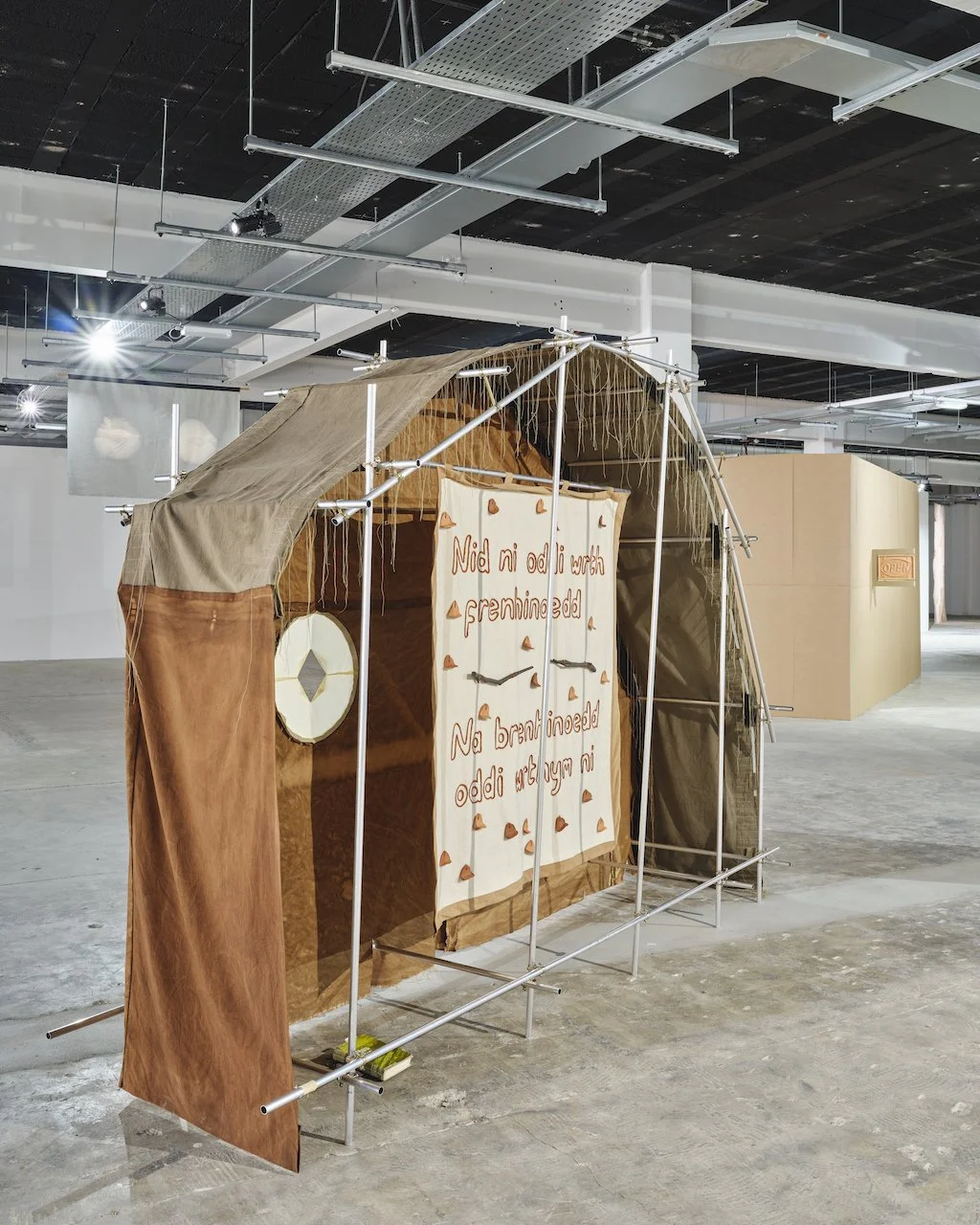
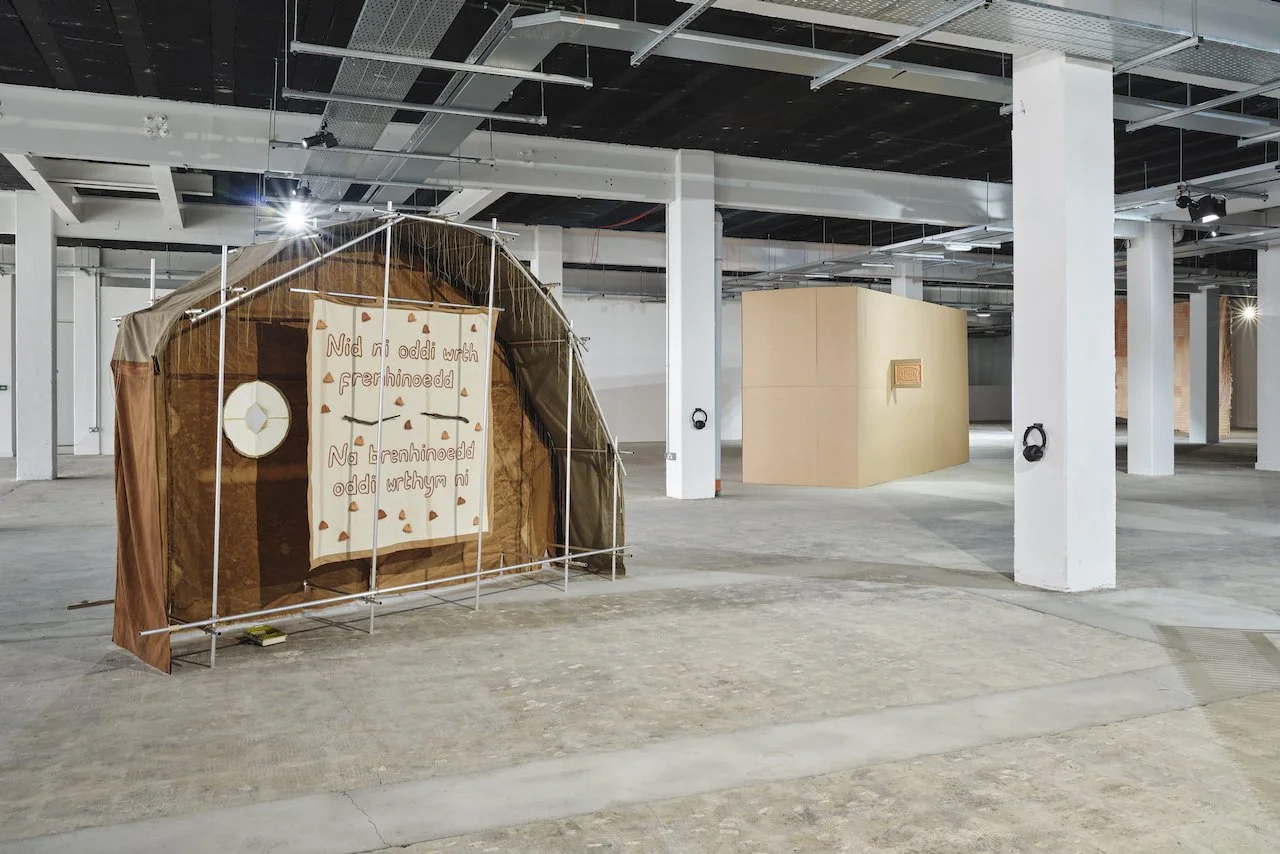
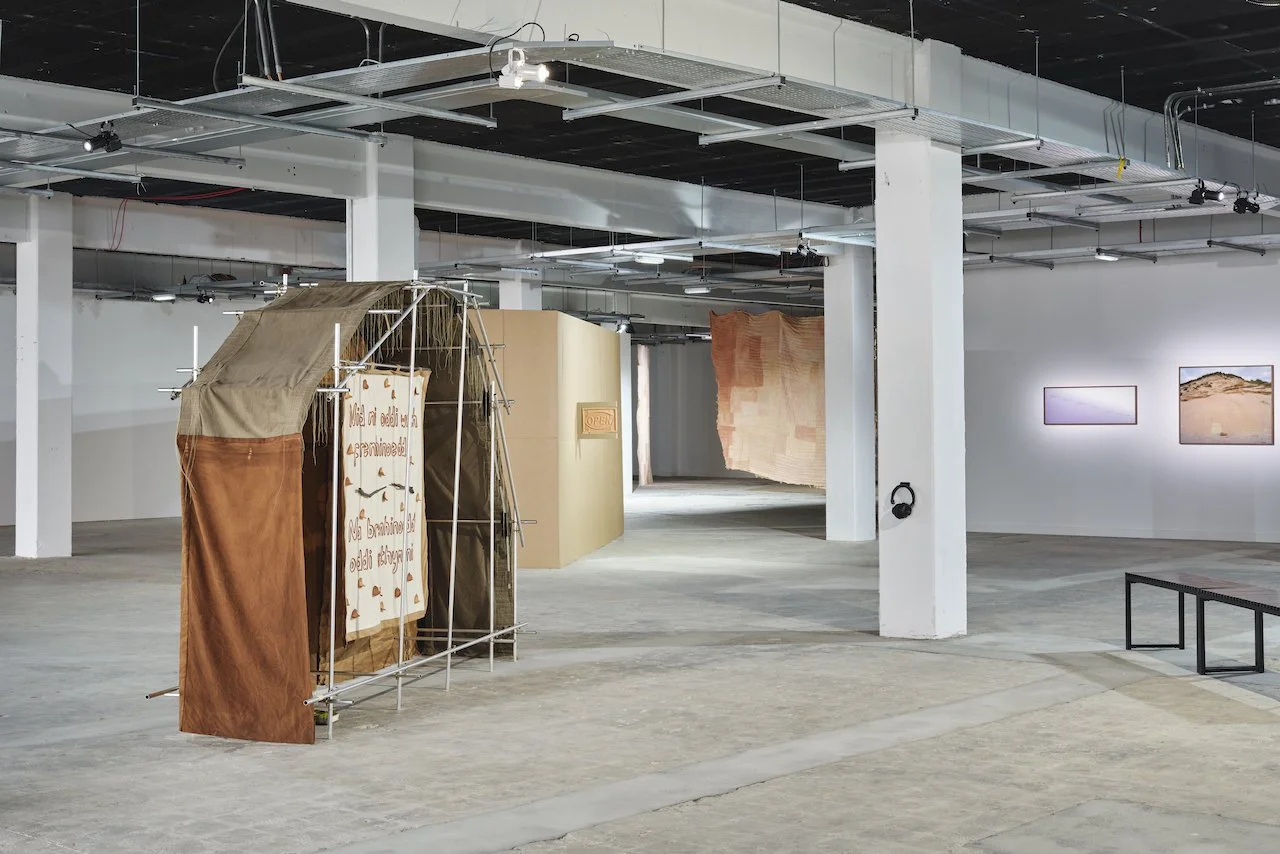
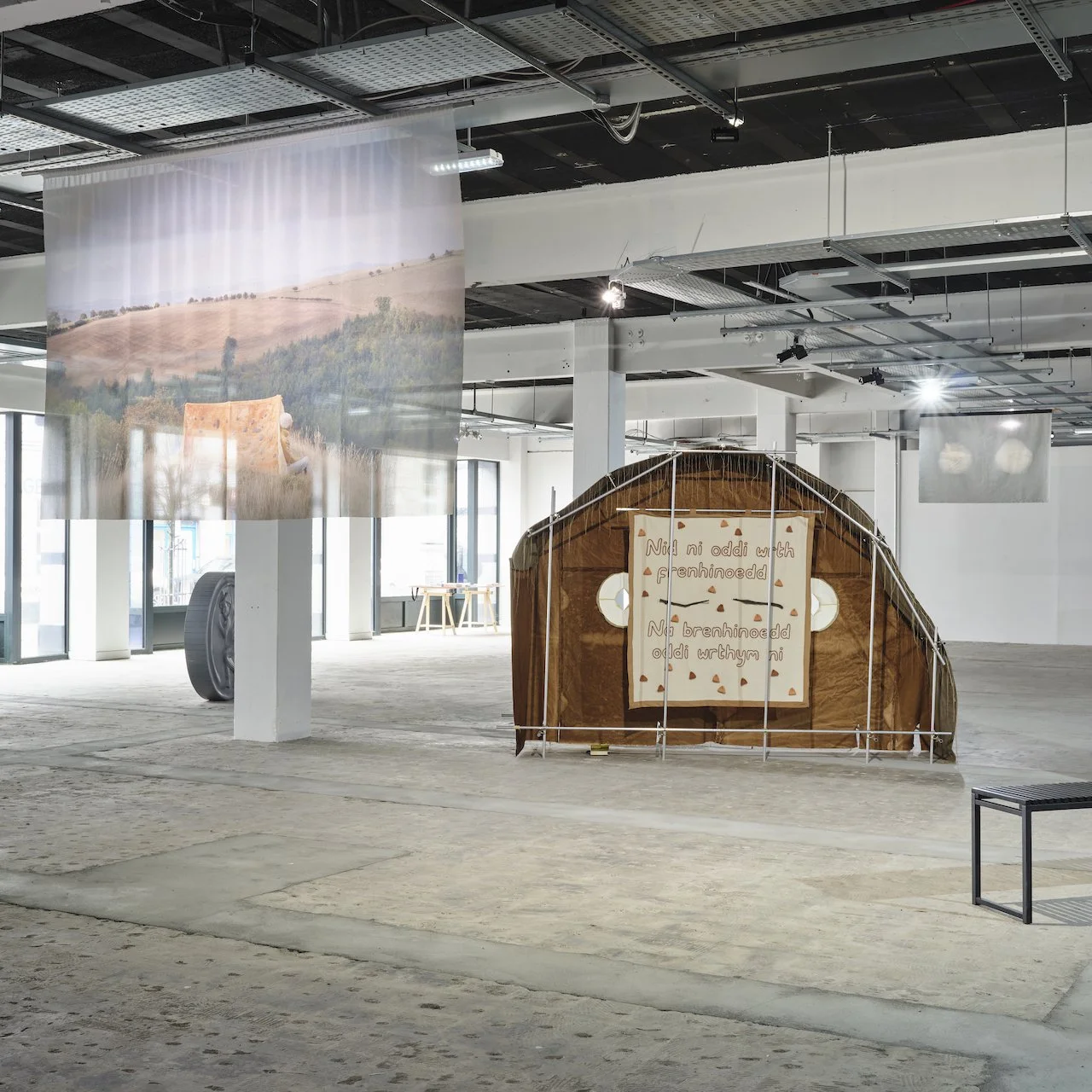
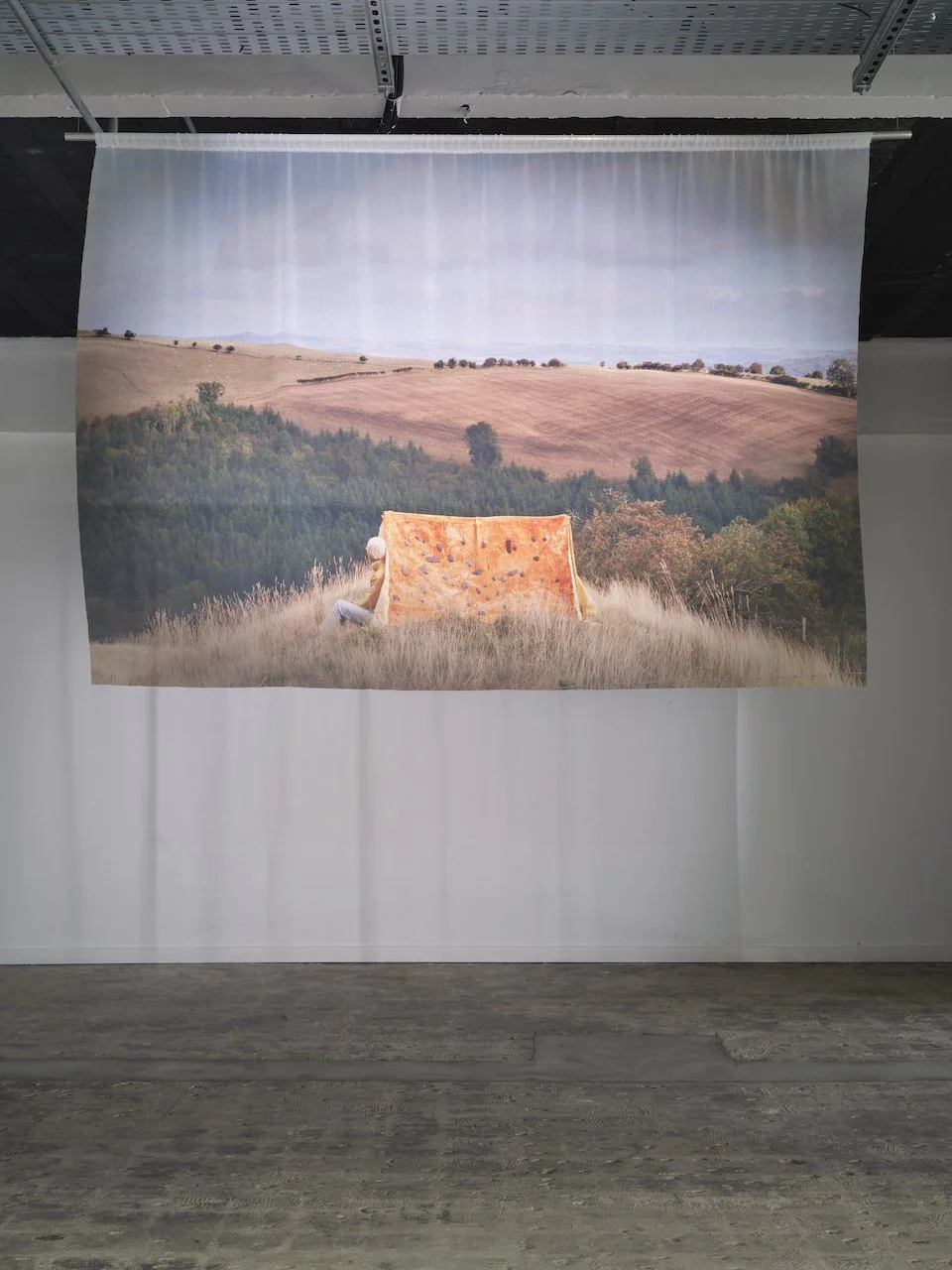
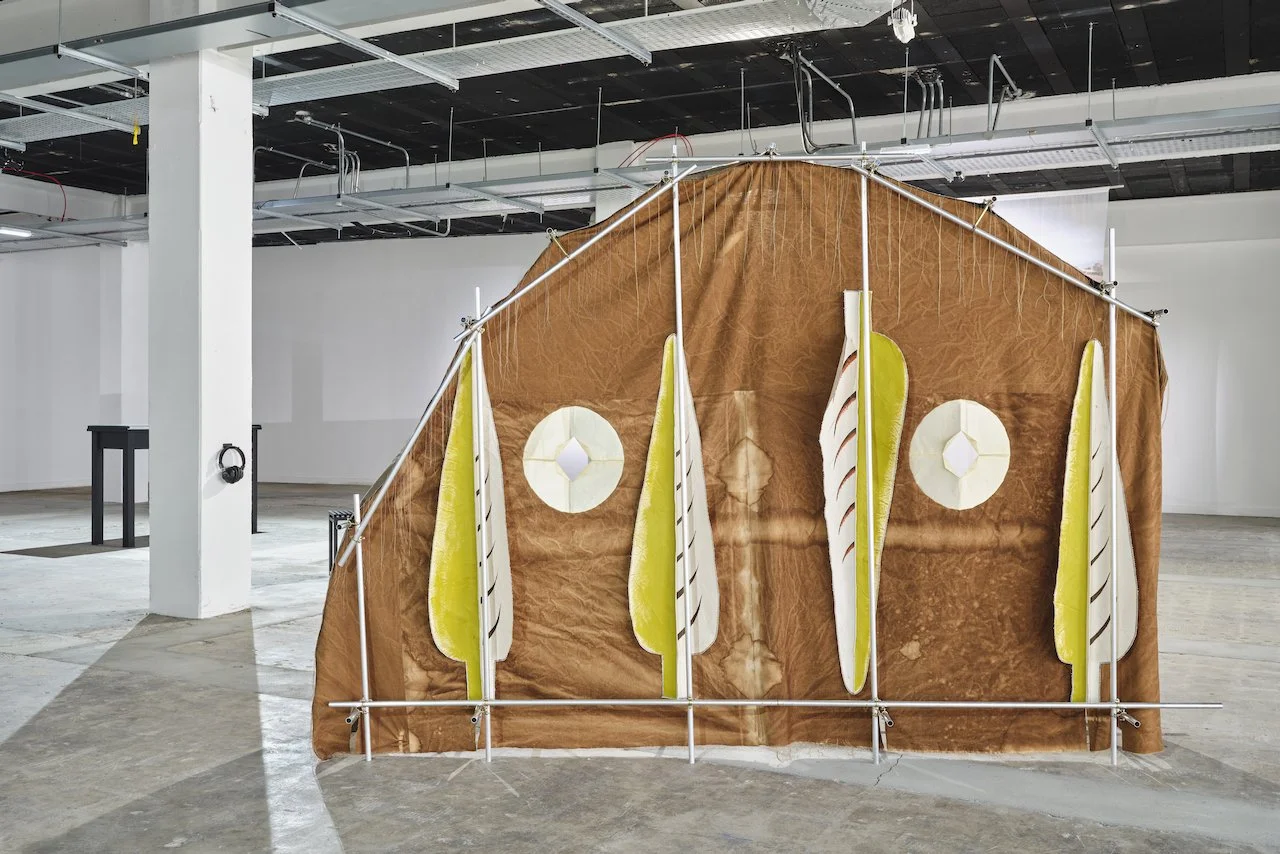
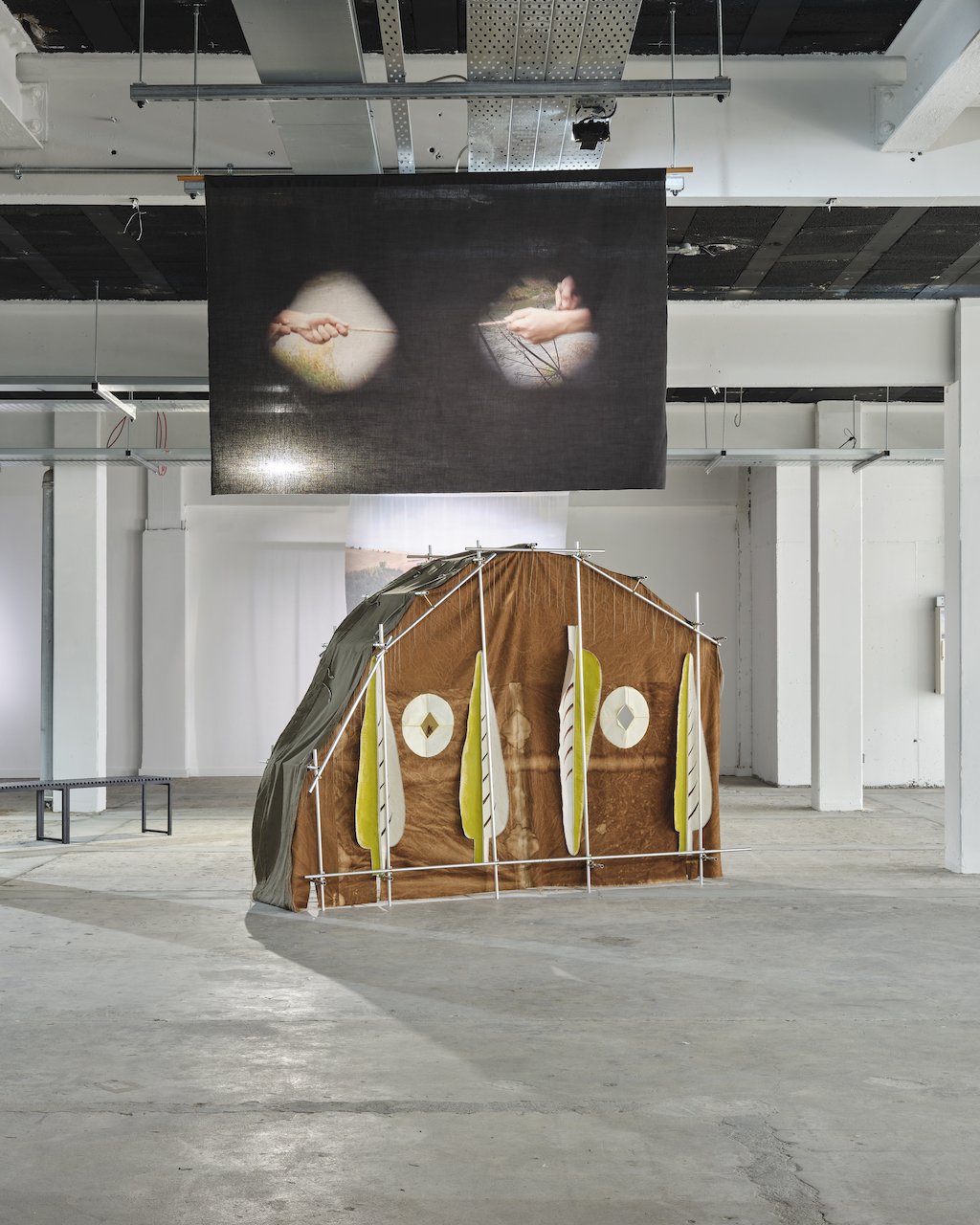
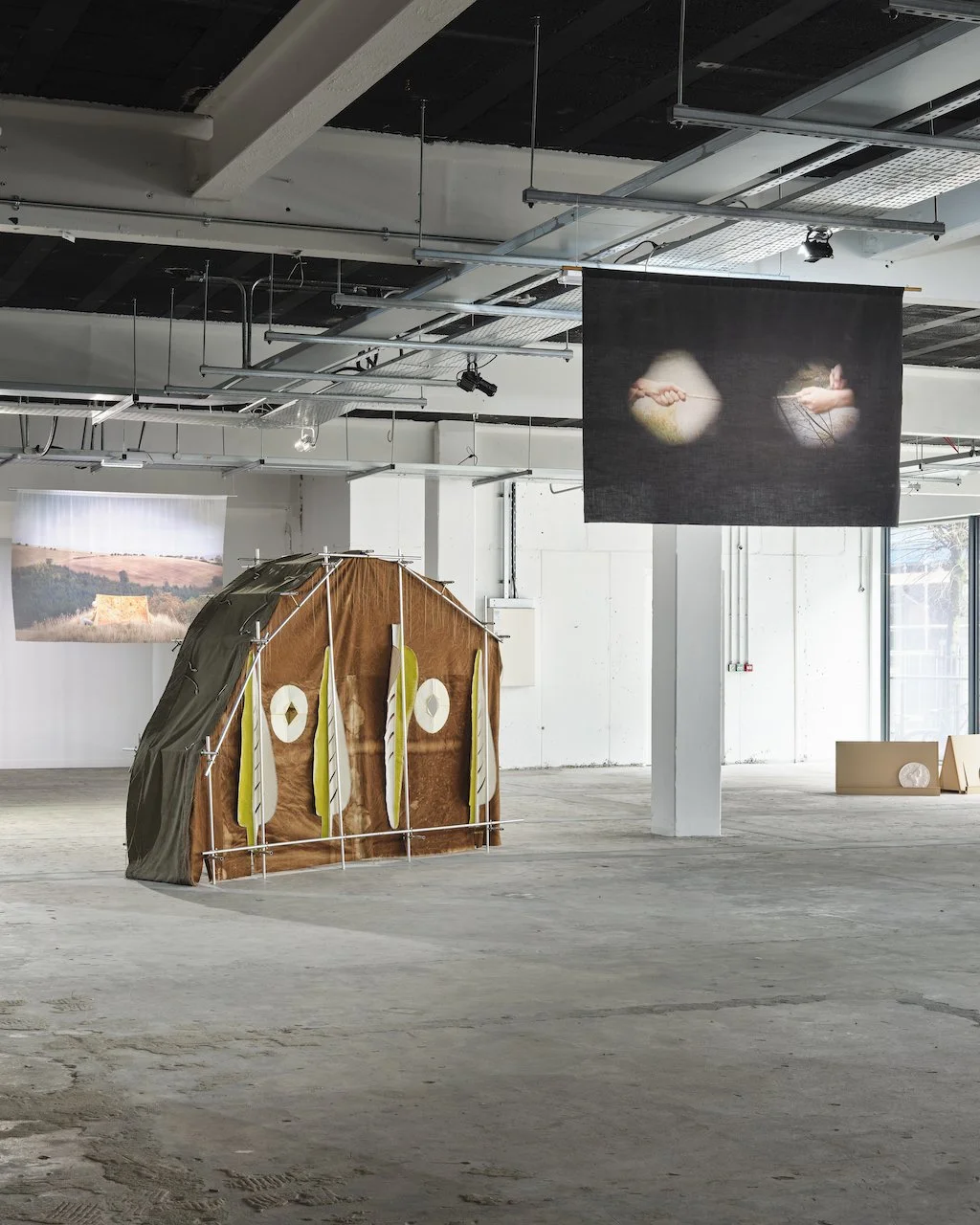
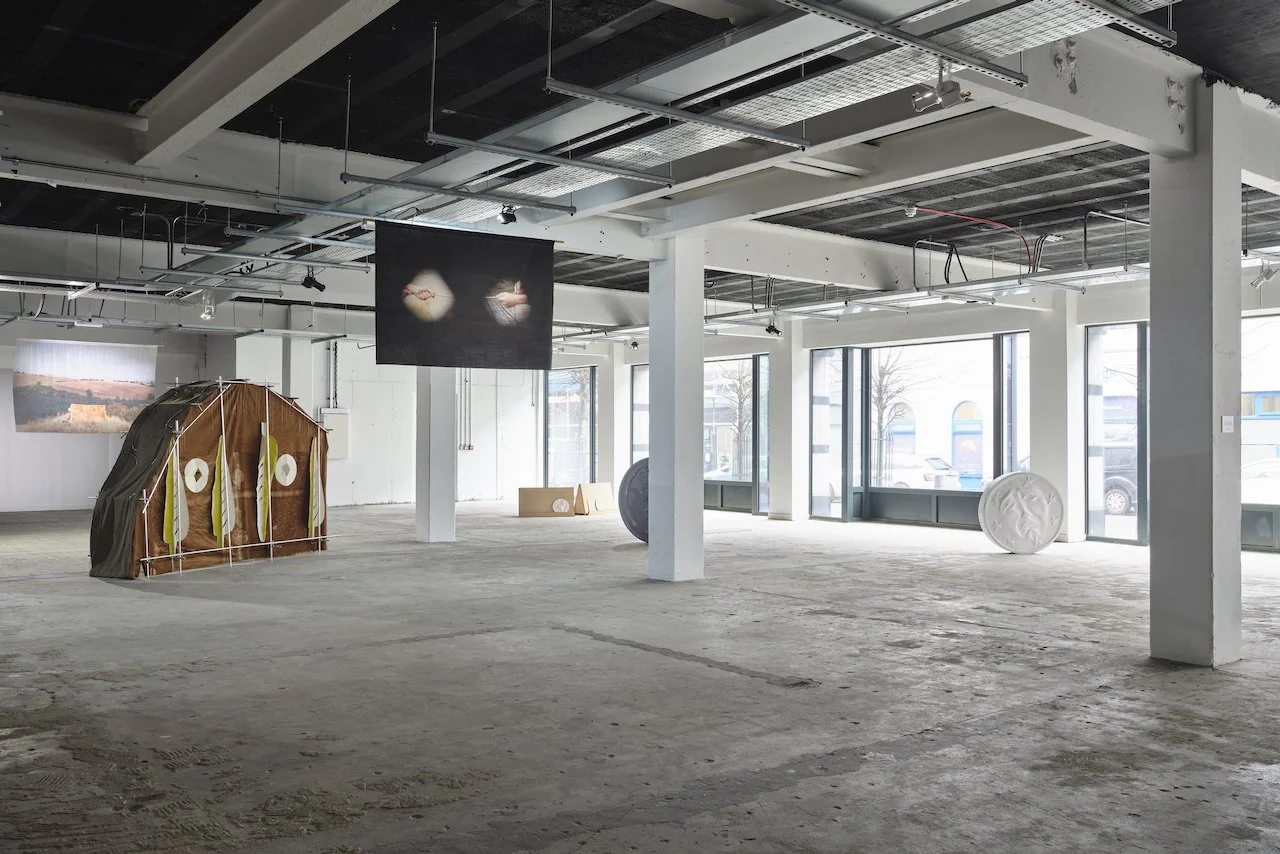
A Field Guide to the Offa’s Dyke delves into the artist’s experience of growing up in the Welsh borders with dual Welsh-English identity. The installation explores the psychogeography of the dyke in the present time, alongside speculative reimaginings of the borderlands and dual identities as a space of creative potential as well as ambiguity. The installation draws on the form of Offa’s dyke, an ancient border earthwork which marks a distinct physical line across the Welsh borderland landscape. The Dyke was constructed in an uneven shape, with the bank much higher on the Welsh side, to allow long views into the landscape. The wool textile piece reimagines a slogan painted on a farmhouse inhabited by members of the artist’s family. The new version, in Welsh, reads ‘Nid ni oddi wrth frenhinoedd, na brenhinoedd oddi wrthym ni’, which means ‘Not We From Kings, Nor From Us Kings’. The audio reflects on visits to sites on the dyke, combined with reflections on family and the borderlands.
A Field Guide to the Offa’s Dyke/Canllaw Maes i Glawdd Offa, 2025
Dyed canvas, wool fabric, thread, aluminium tubing, metal fixings, cast pewter, and photographic print on textile
Emily Joy
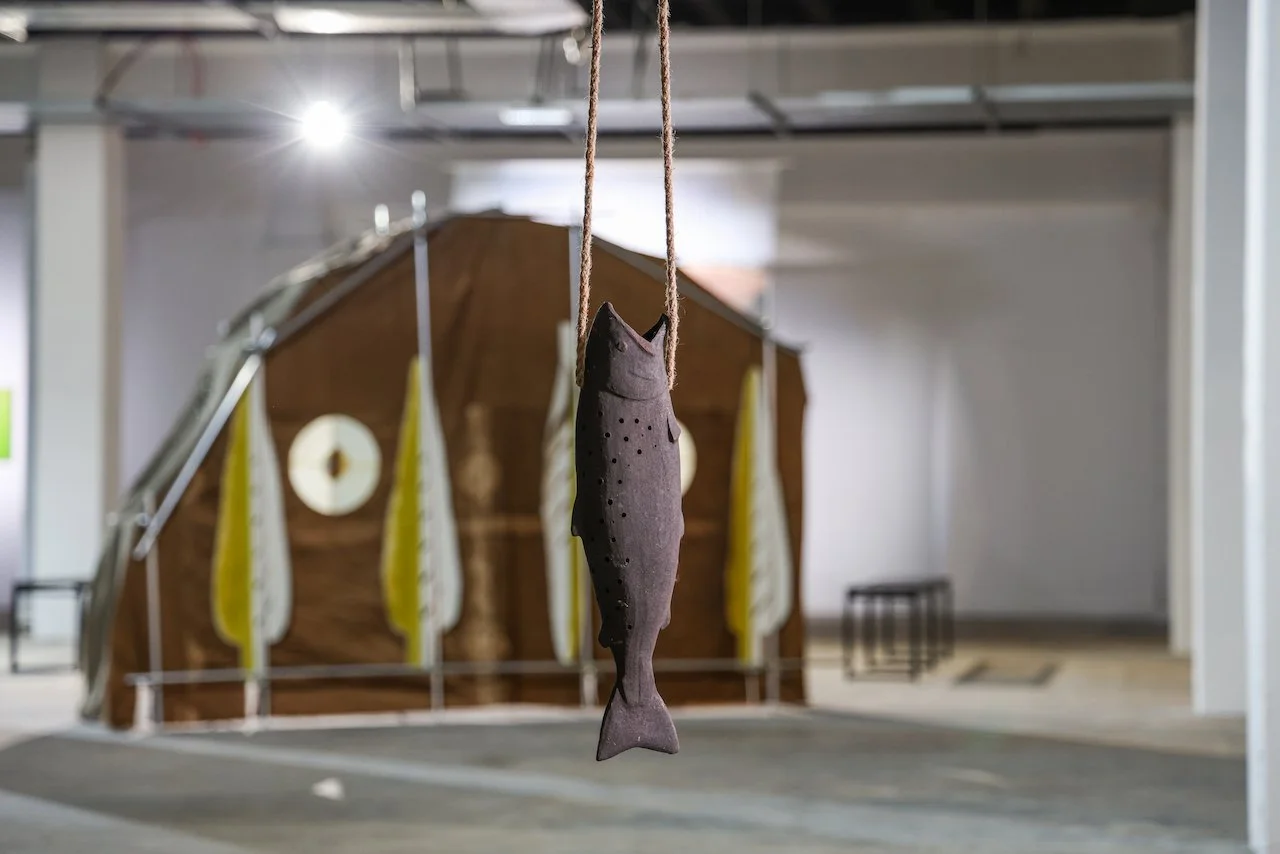
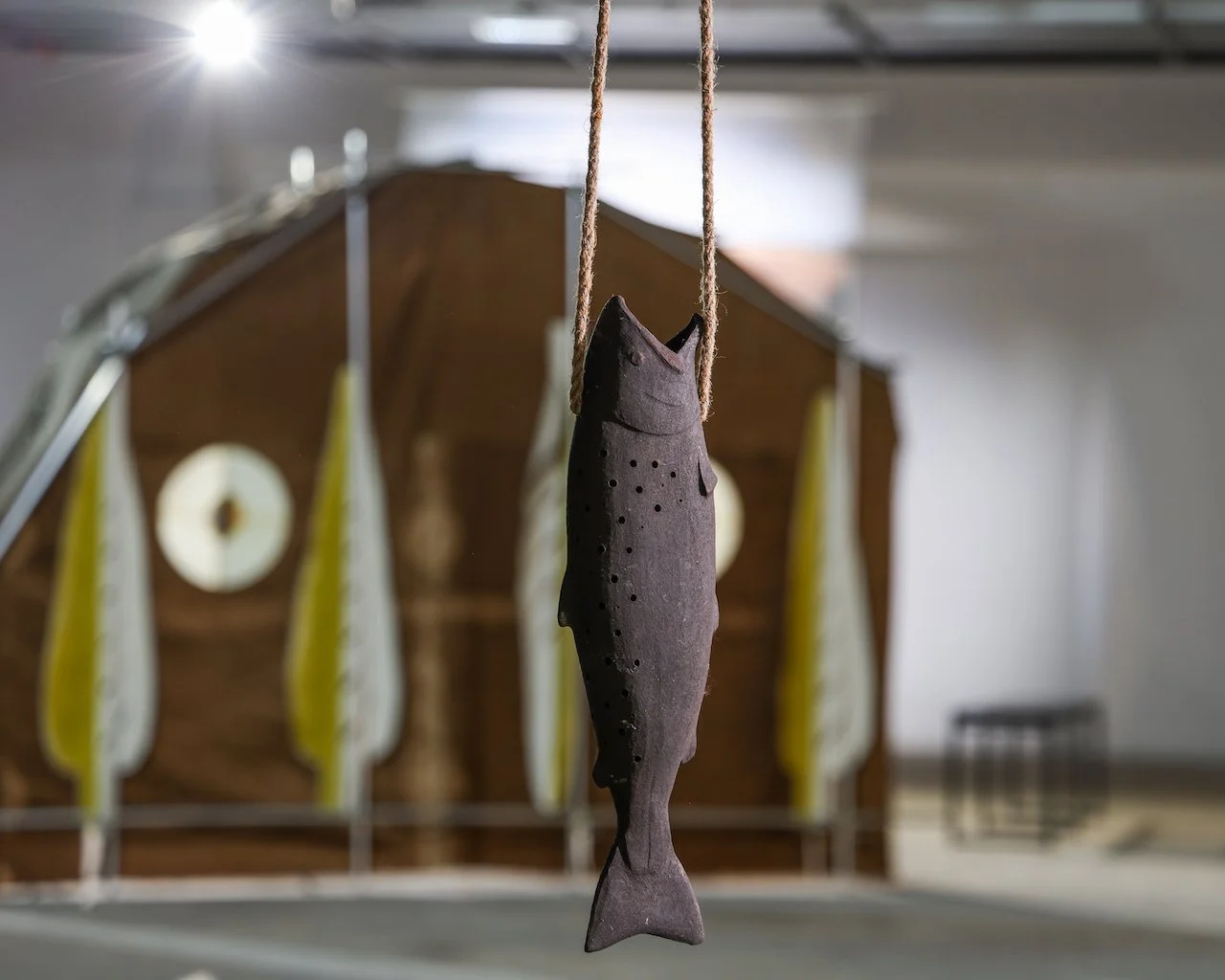
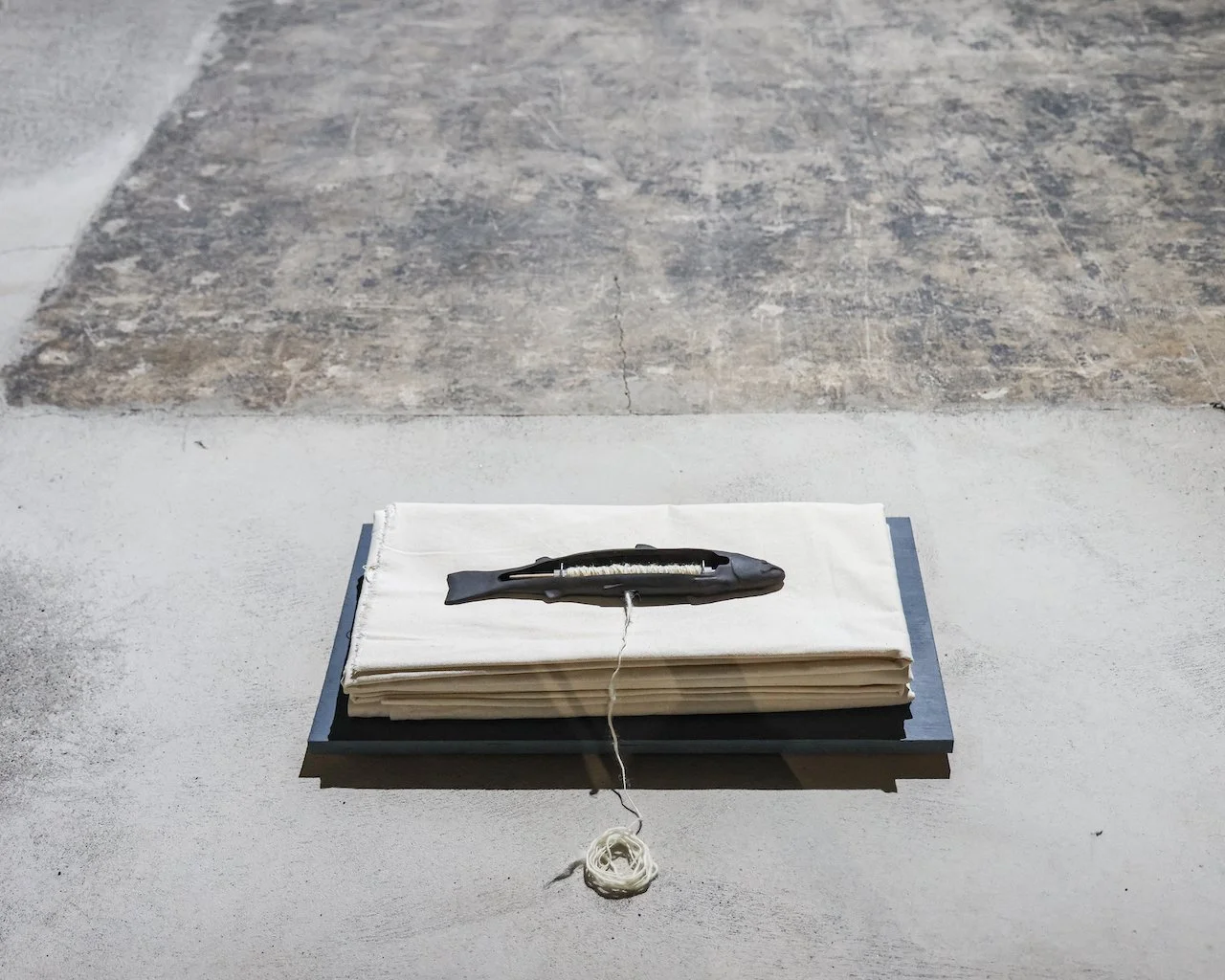
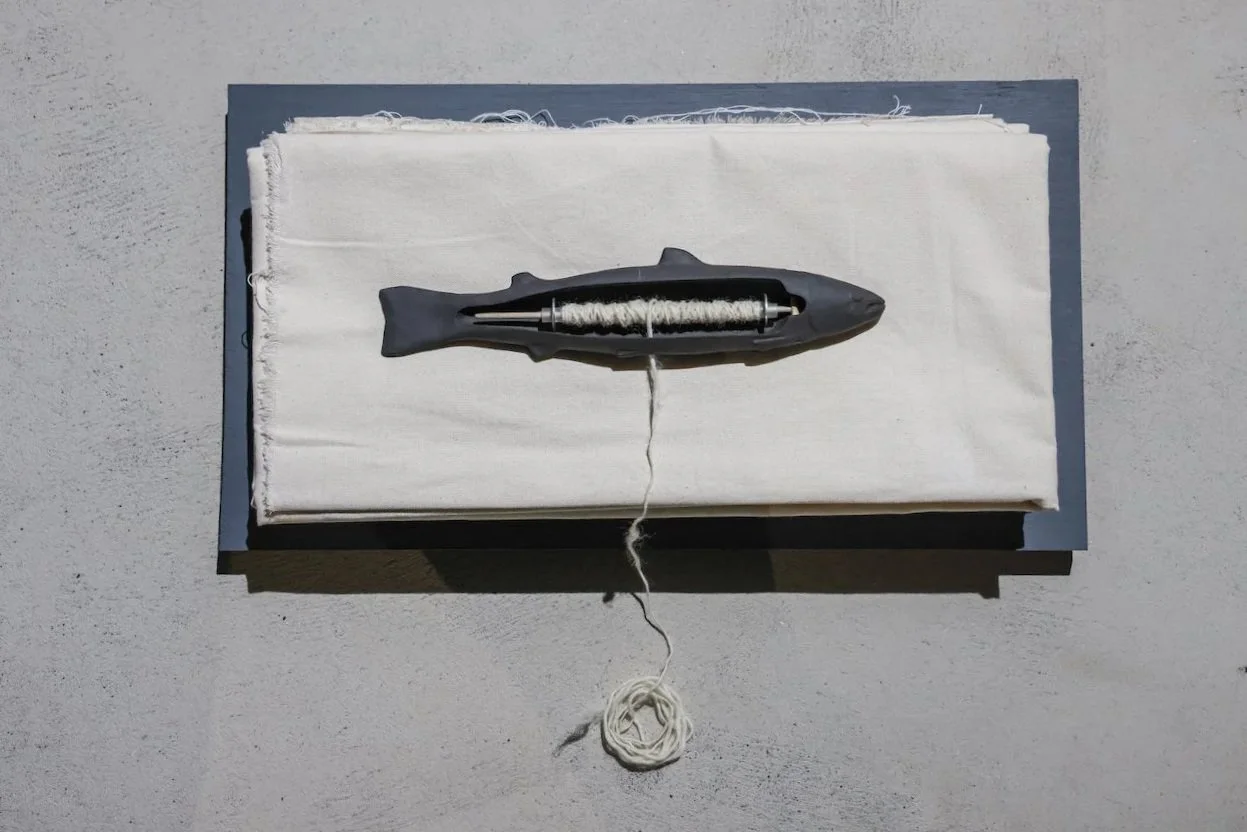
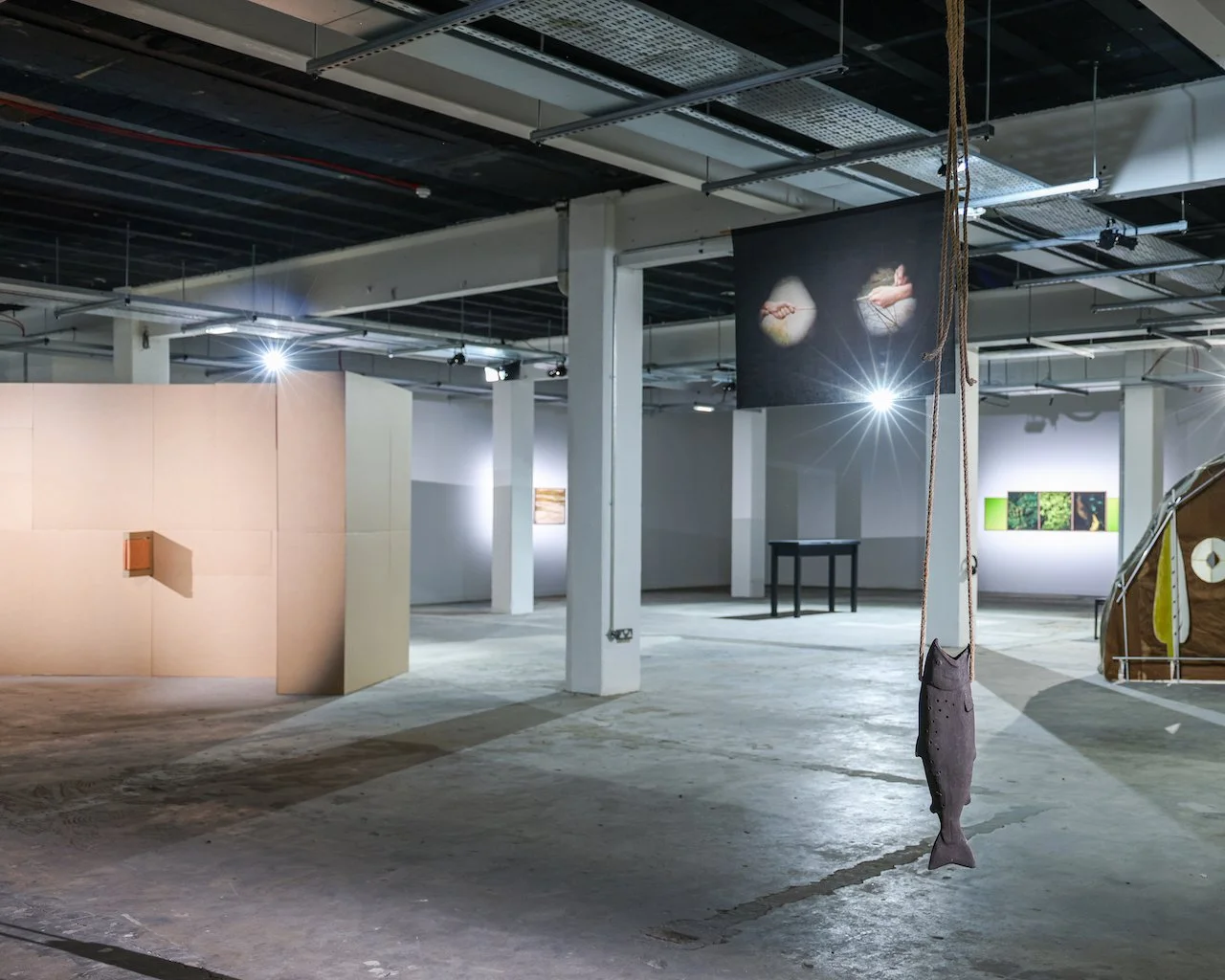
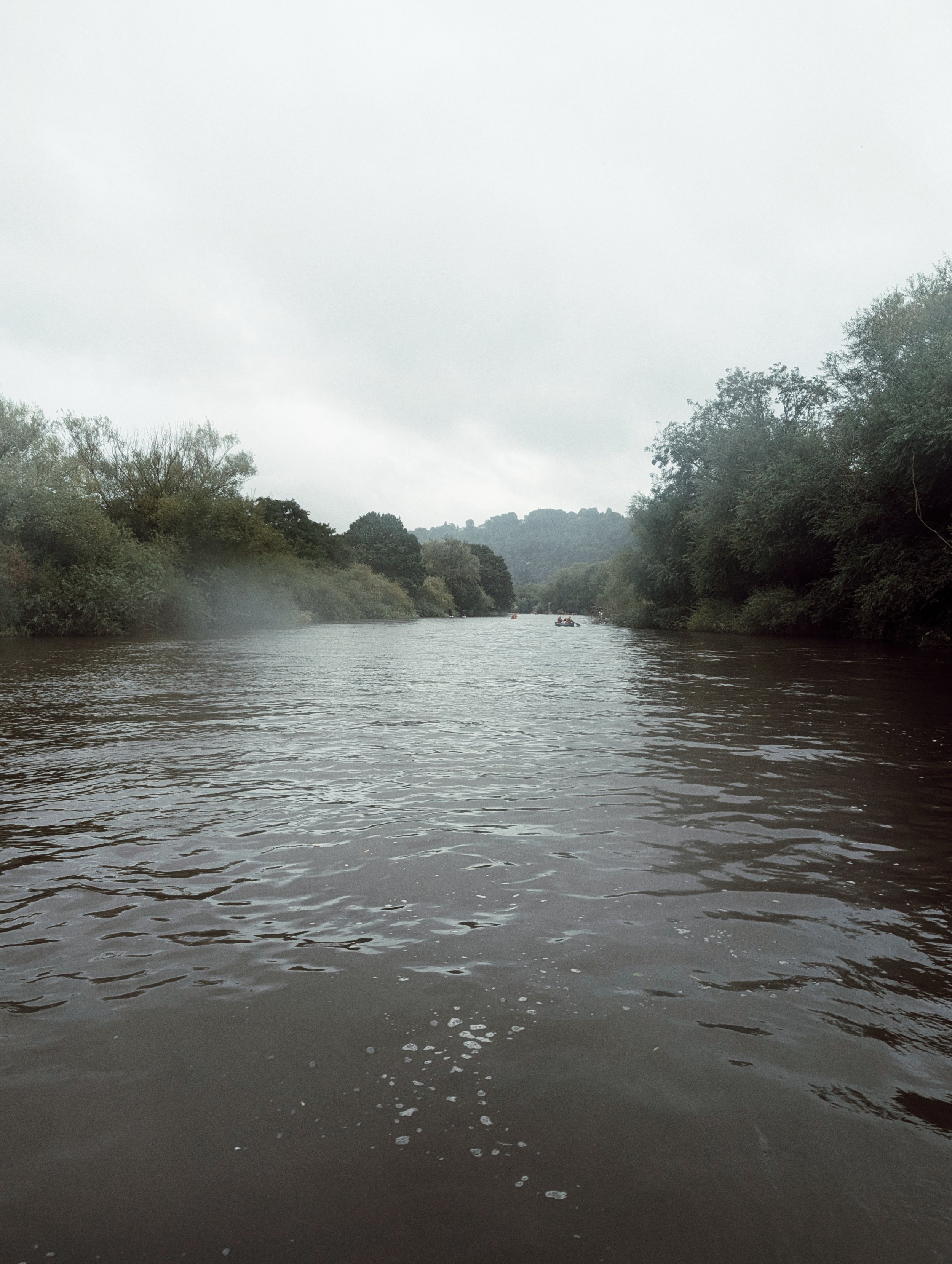
A printed image on linen hangs from a wooden dowel. The fabric is mostly charcoal-black with two vignette-type images sitting side by side like spy holes. Each image shows a view of one side of the riverbank of the river Wye, where the border between England and Wales falls, with a pair of hands holding a taut rope as if engaged in a tug-of-war or pulling something up from the river. A small matte-black ceramic shuttle in the shape of a salmon lies on a stack of cream calico folded into a rectangle. The shuttle, used for weaving, contains a bobbin of hand-spun cream coloured wool, which emerges from the stomach of the salmon shuttle and flows out onto the floor. A matte-black ceramic salmon hangs from a long rope. Inside the hollow body of the salmon is a small white bag of granulated ferrous oxide. The ceramic surface of the salmon is smudged with small areas of river mud and fragments of plants where it was submerged in the River Wye.
Mae ffin yn llinell ddotiog sydd ar goll yn yr afon/A border is a dotted line lost in the river, 2025
Printed linen and wood
Trwy ddŵr fel ystof/Through water like warp, 2025
Black clay, hand-spun wool, wood, bobbin, and calico
Eog Gwy/Wye salmon, 2025
Black clay, granulated ferrous oxide, corks, and rope
Durre Shahwar
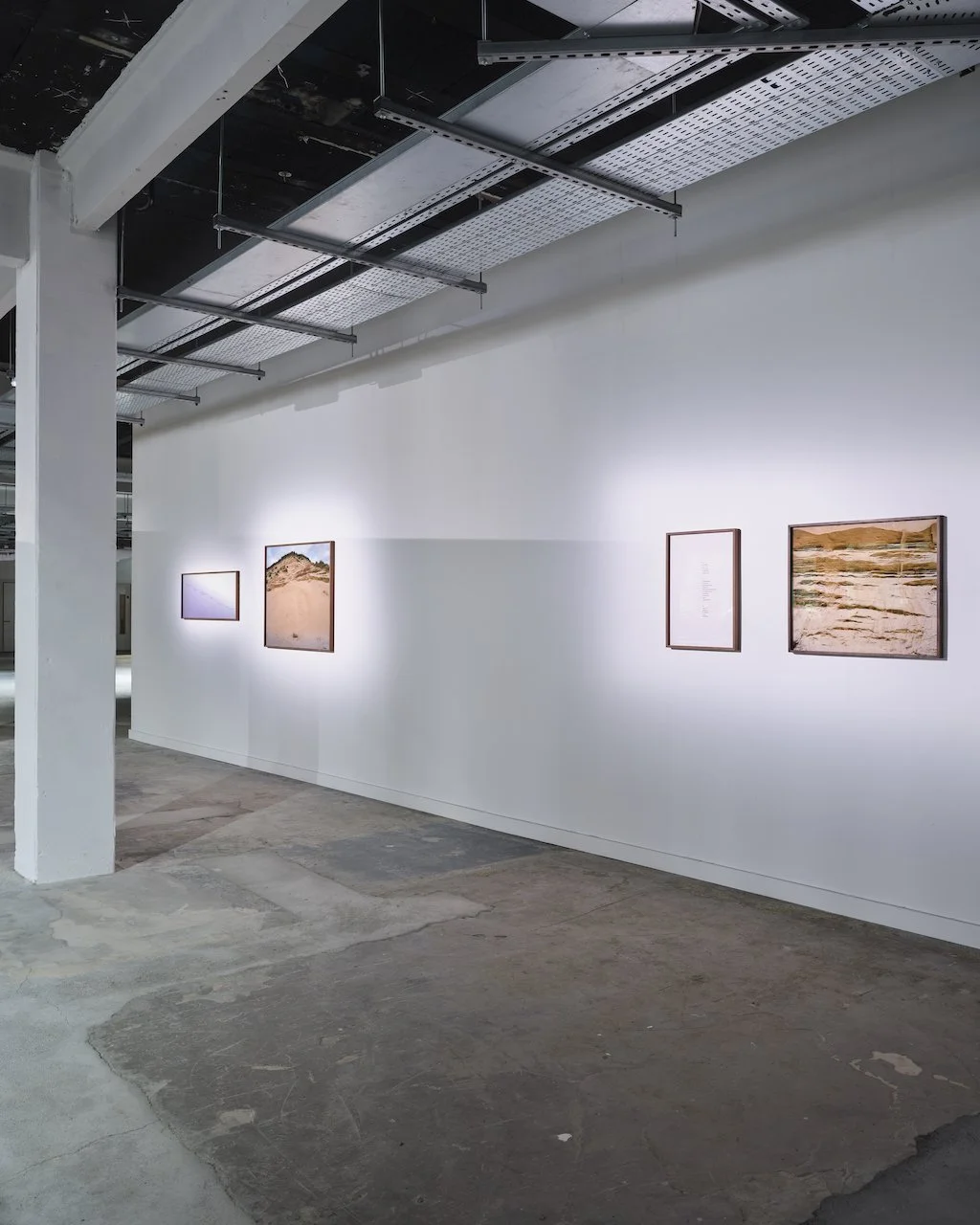
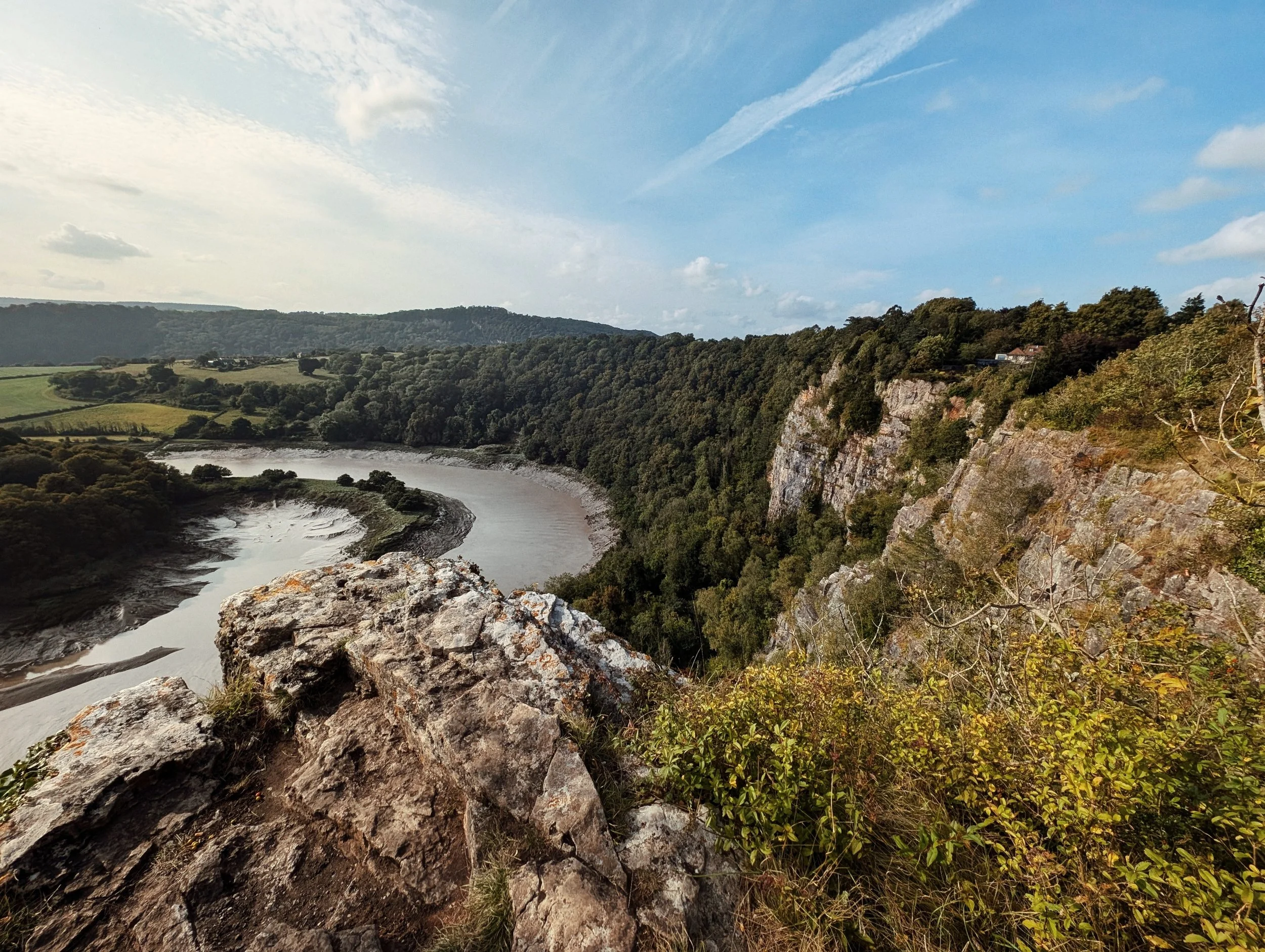
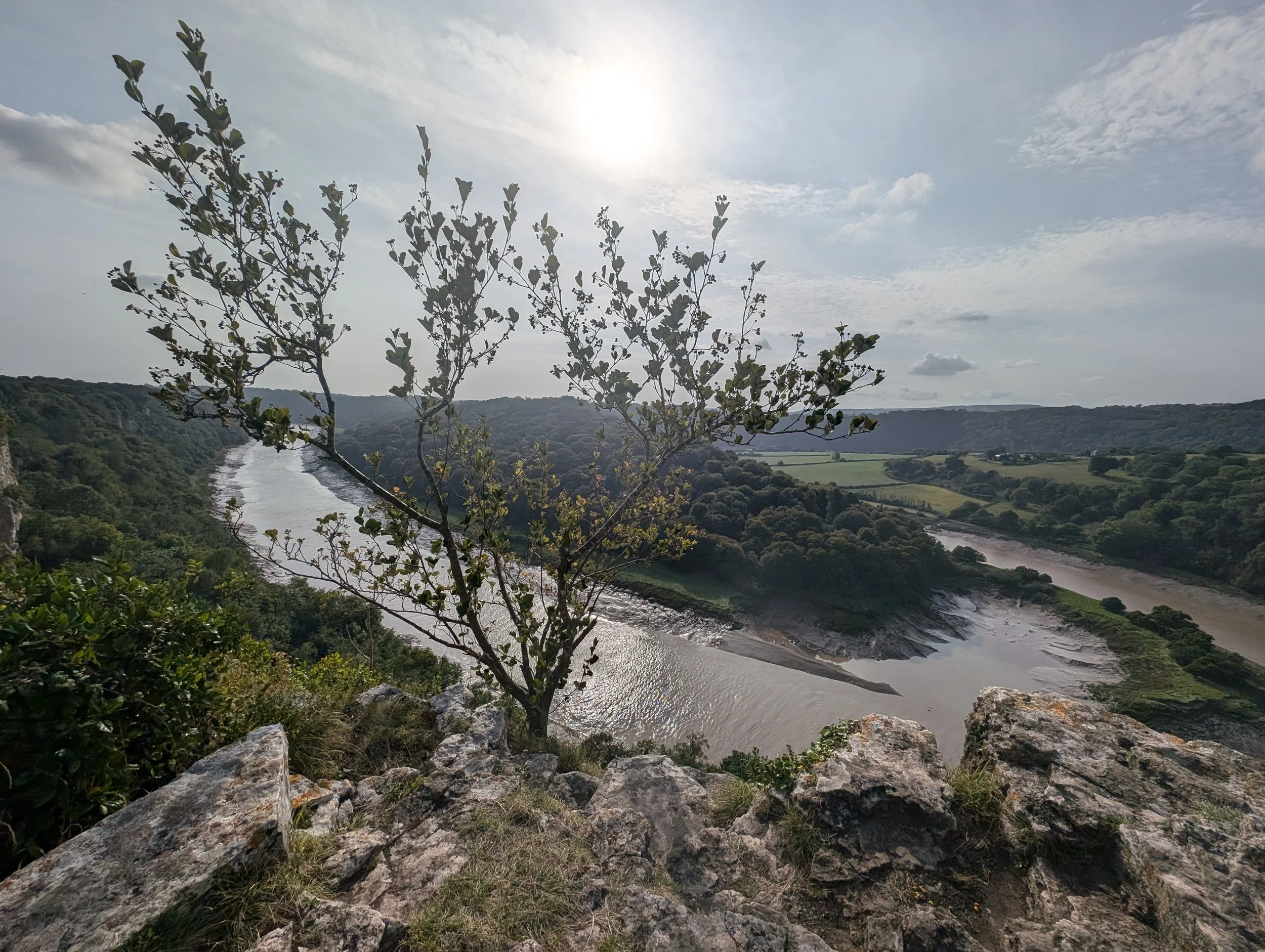
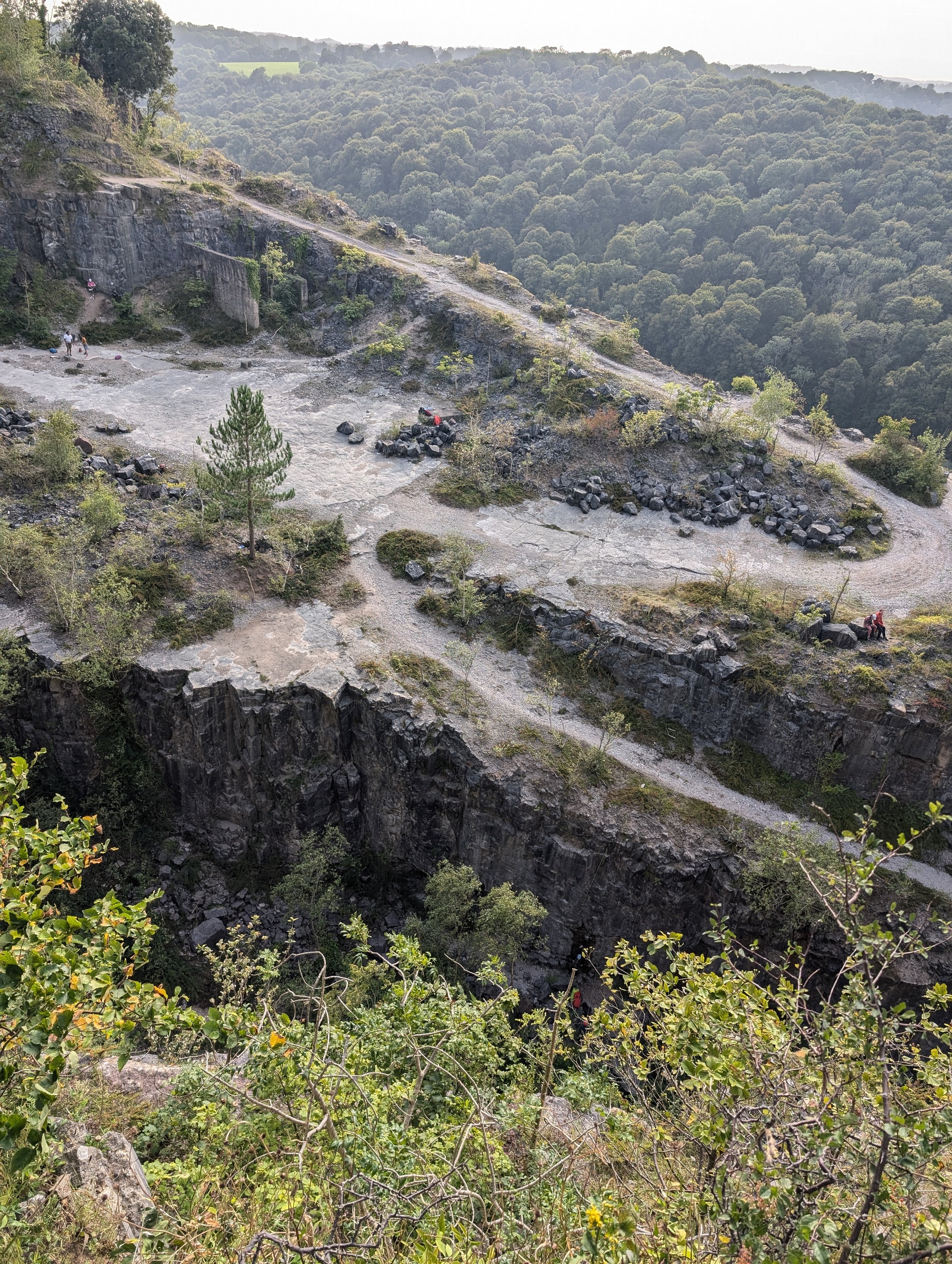
Reorientating Borders Into is a series of research images which respond to the Welsh borderlands and reflect on how place, power, and storytelling intersect. These images were captured on different walks across the Welsh/English border in South Wales, ranging from Wintour’s Leap, Offa’s Dyke path, and the River Wye. They speak to shifting boundaries and marking and unmarking different terrains. The fragmented texts and images seek to reflect the re-orienting and renegotiation of the idea of borders and borderlands.
Reorientating Borders Into, 2025
C-type photographic prints with satin and matt finishes
Seán O’Riordan
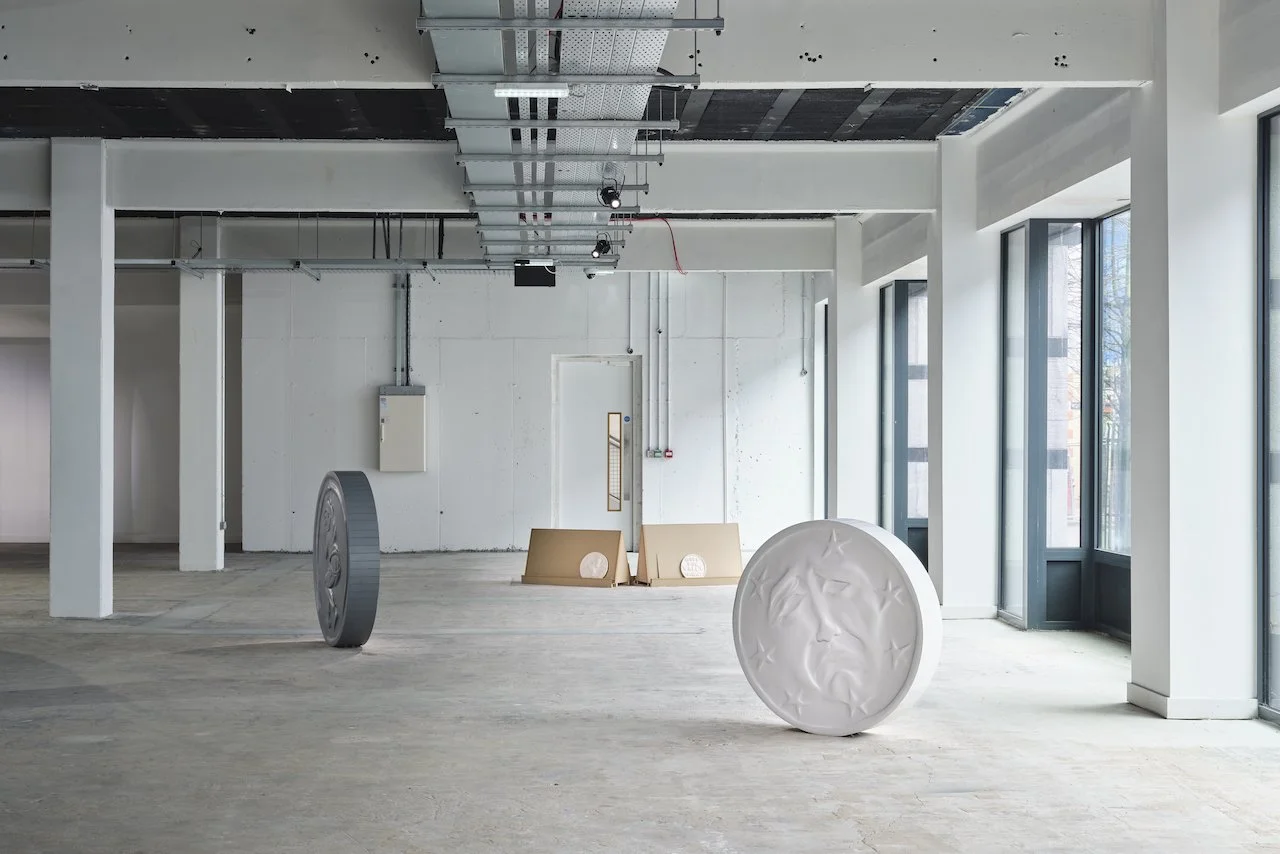
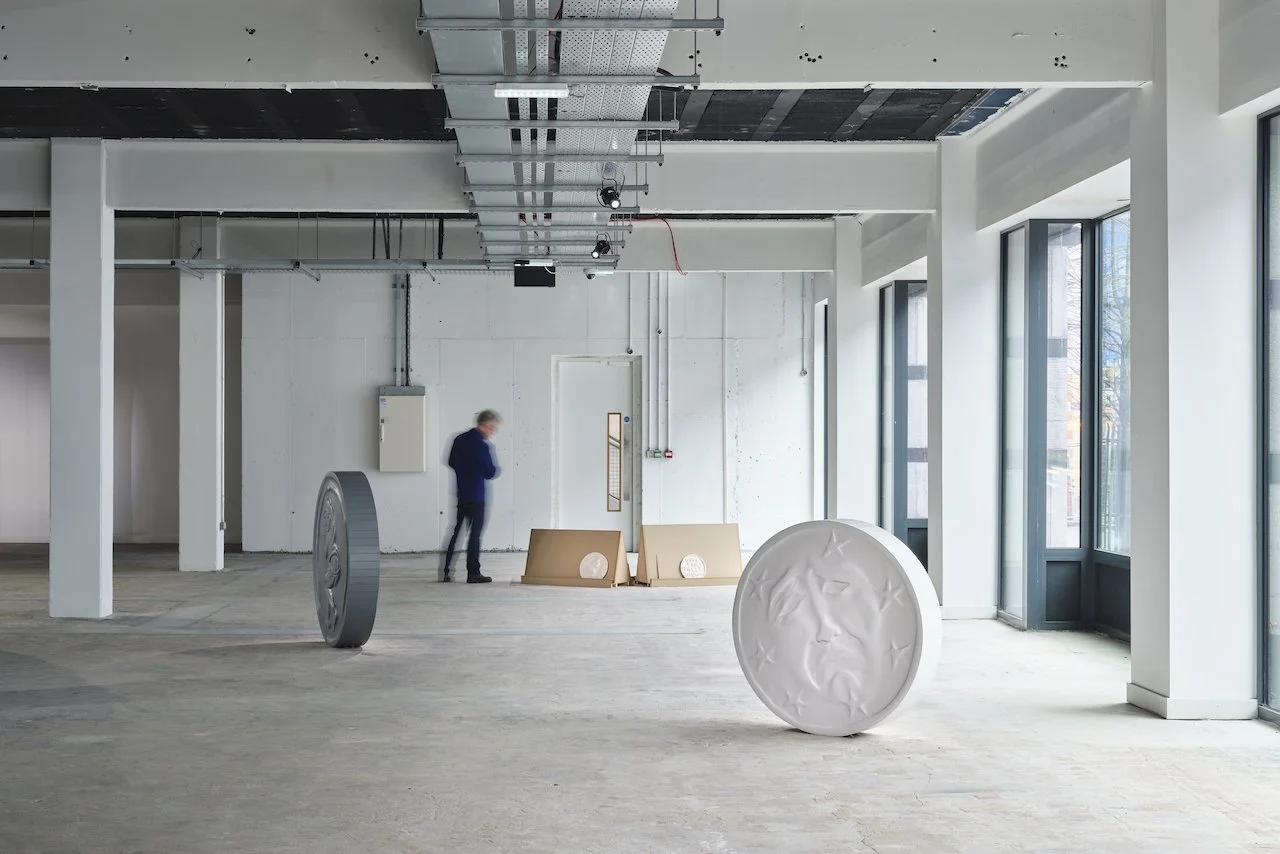
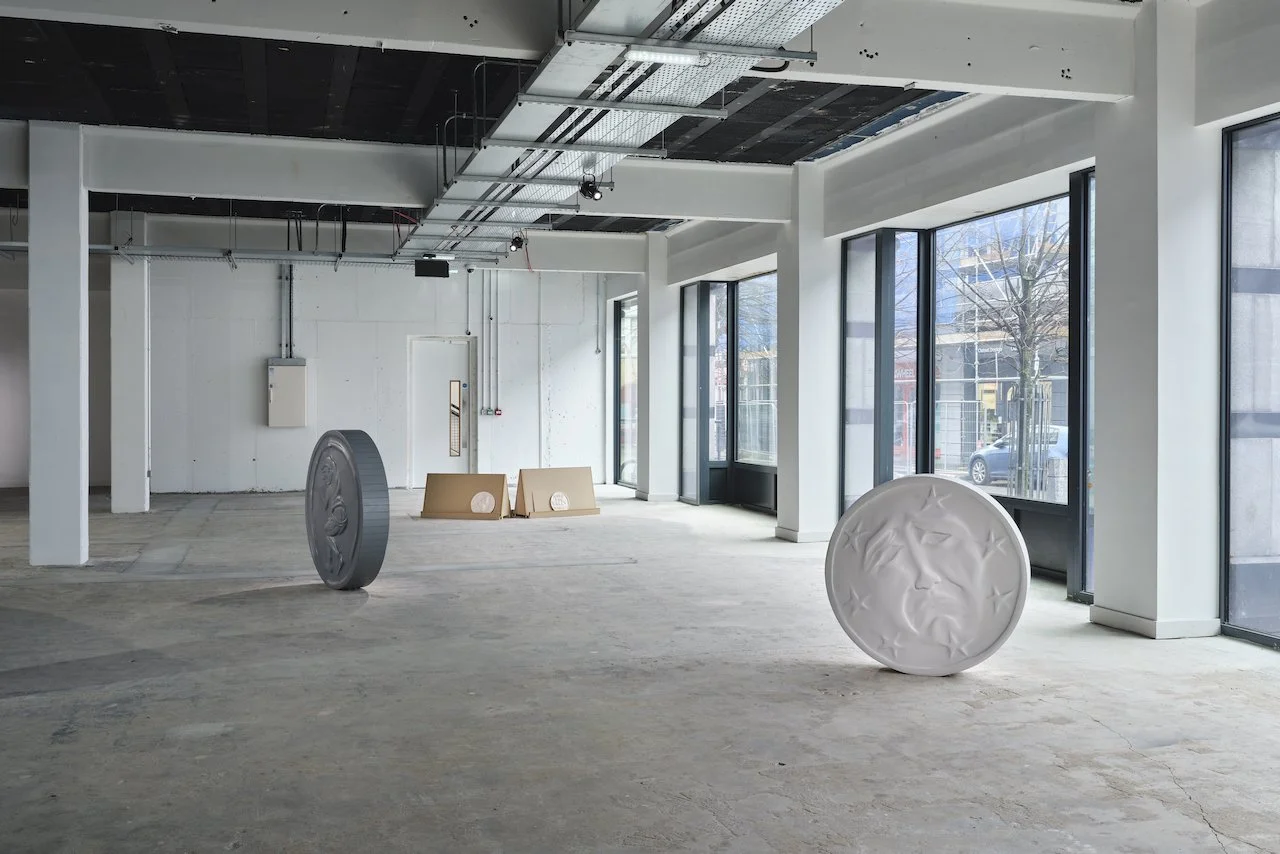
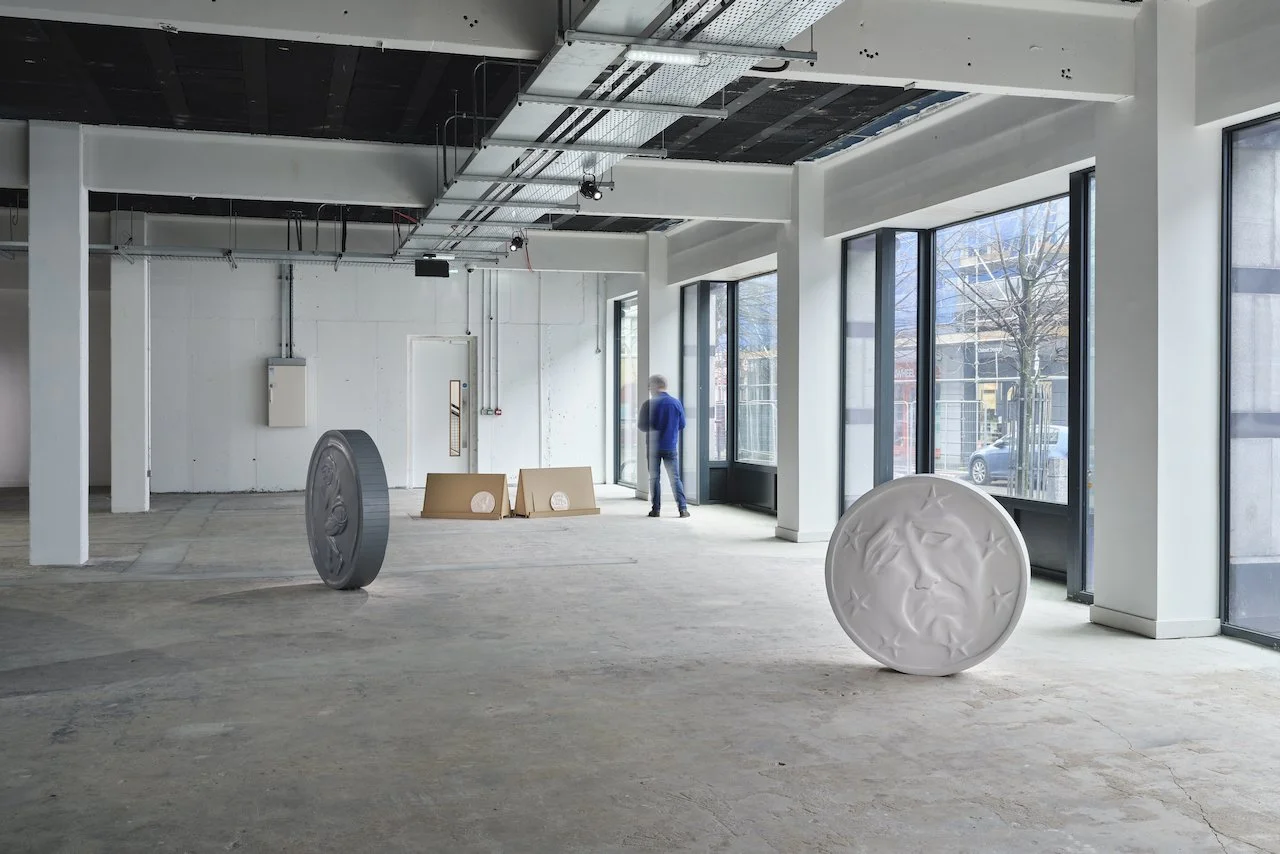
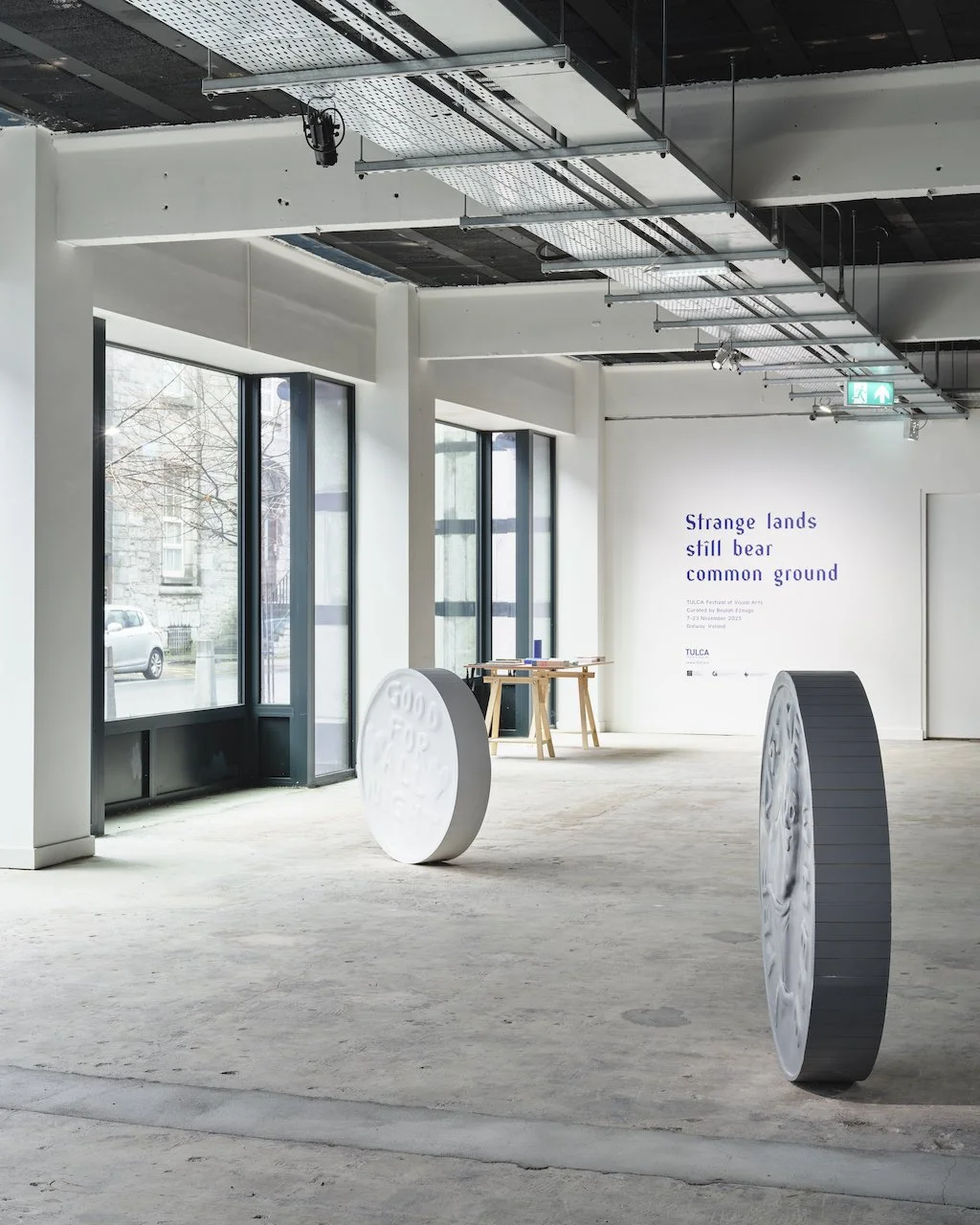
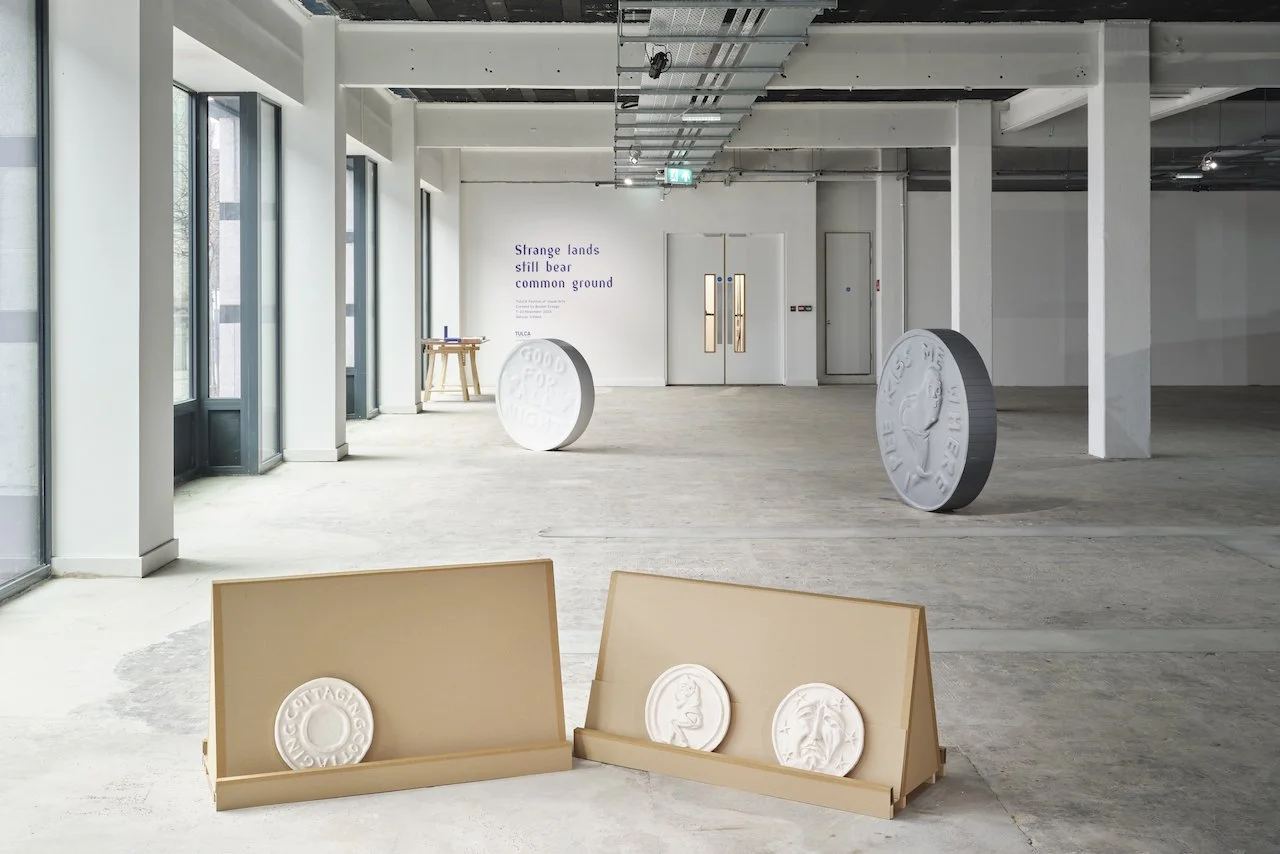
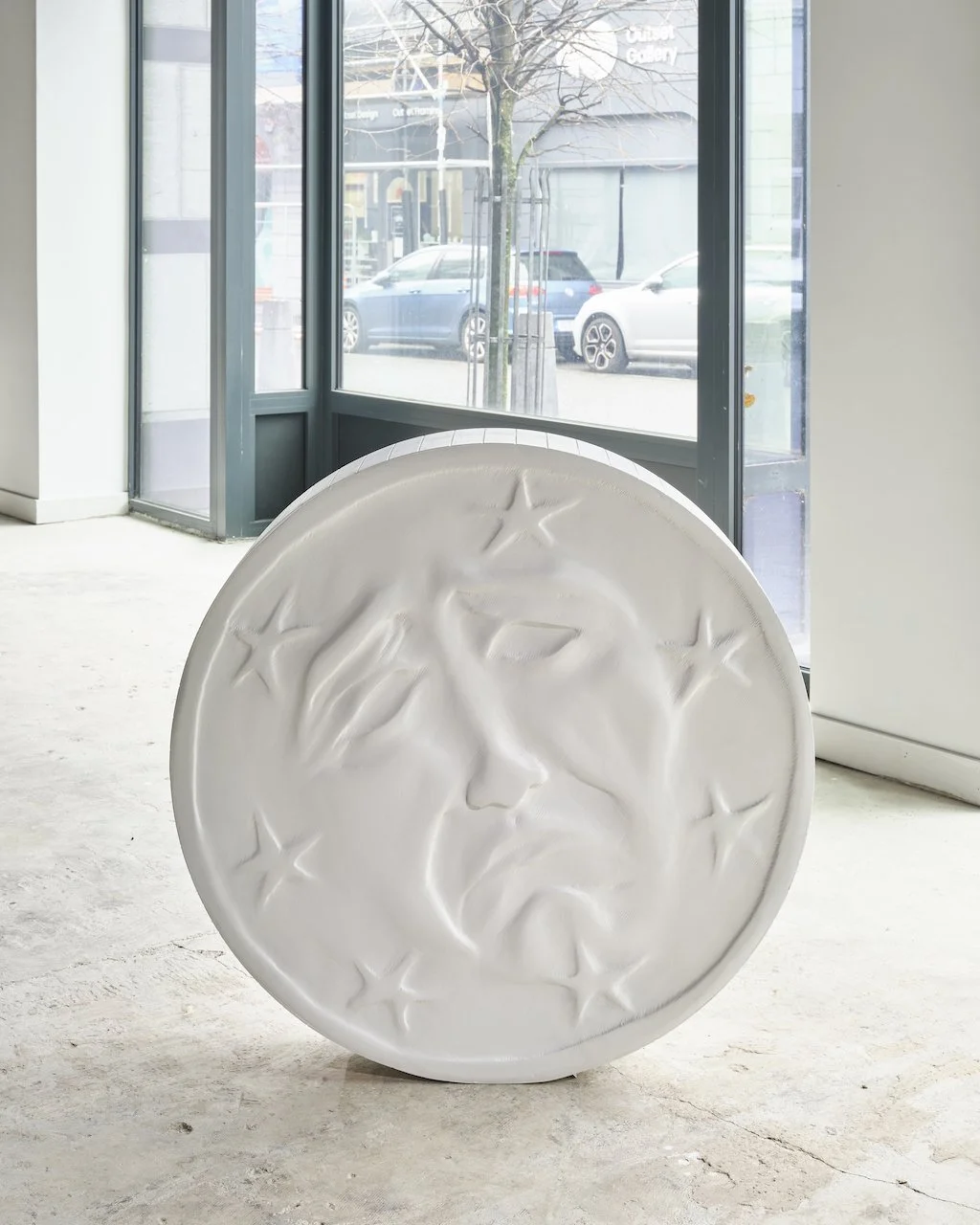
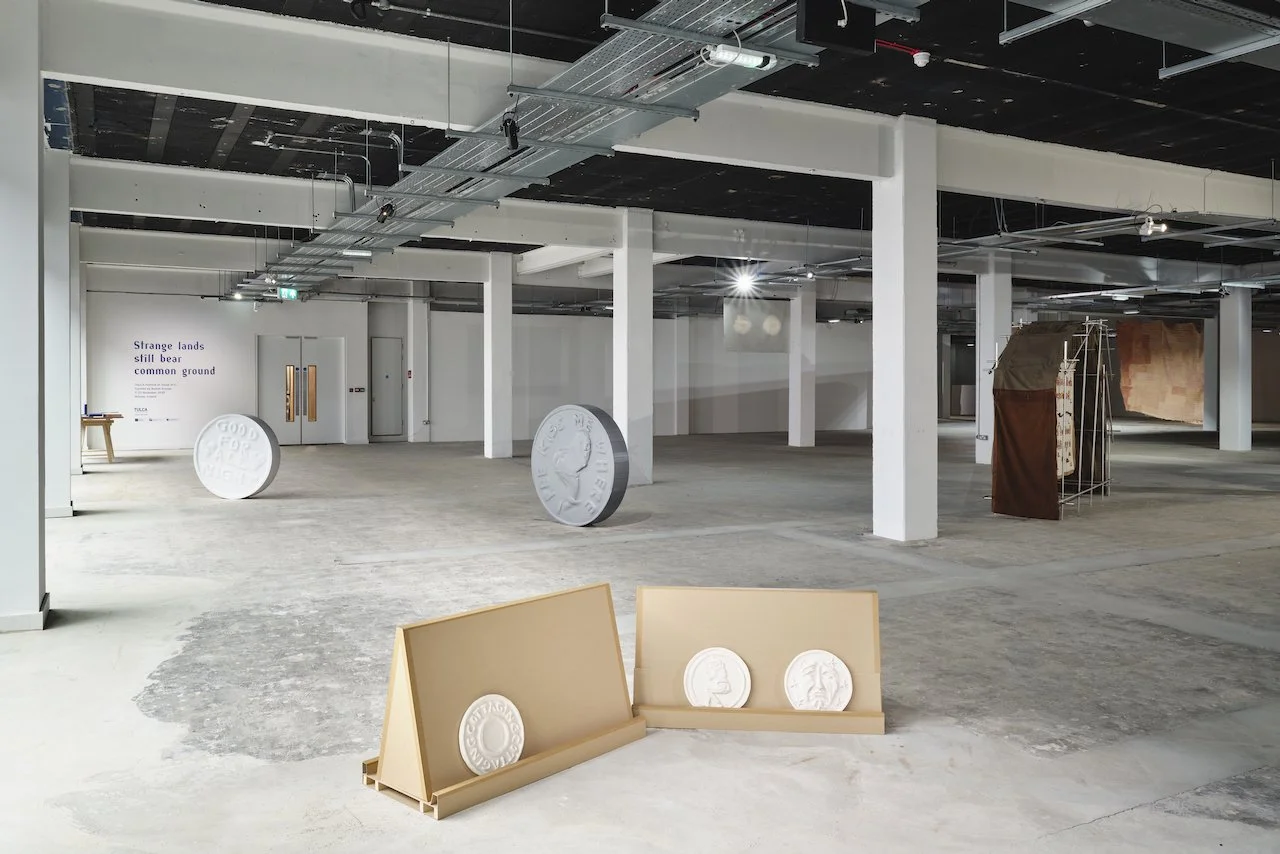
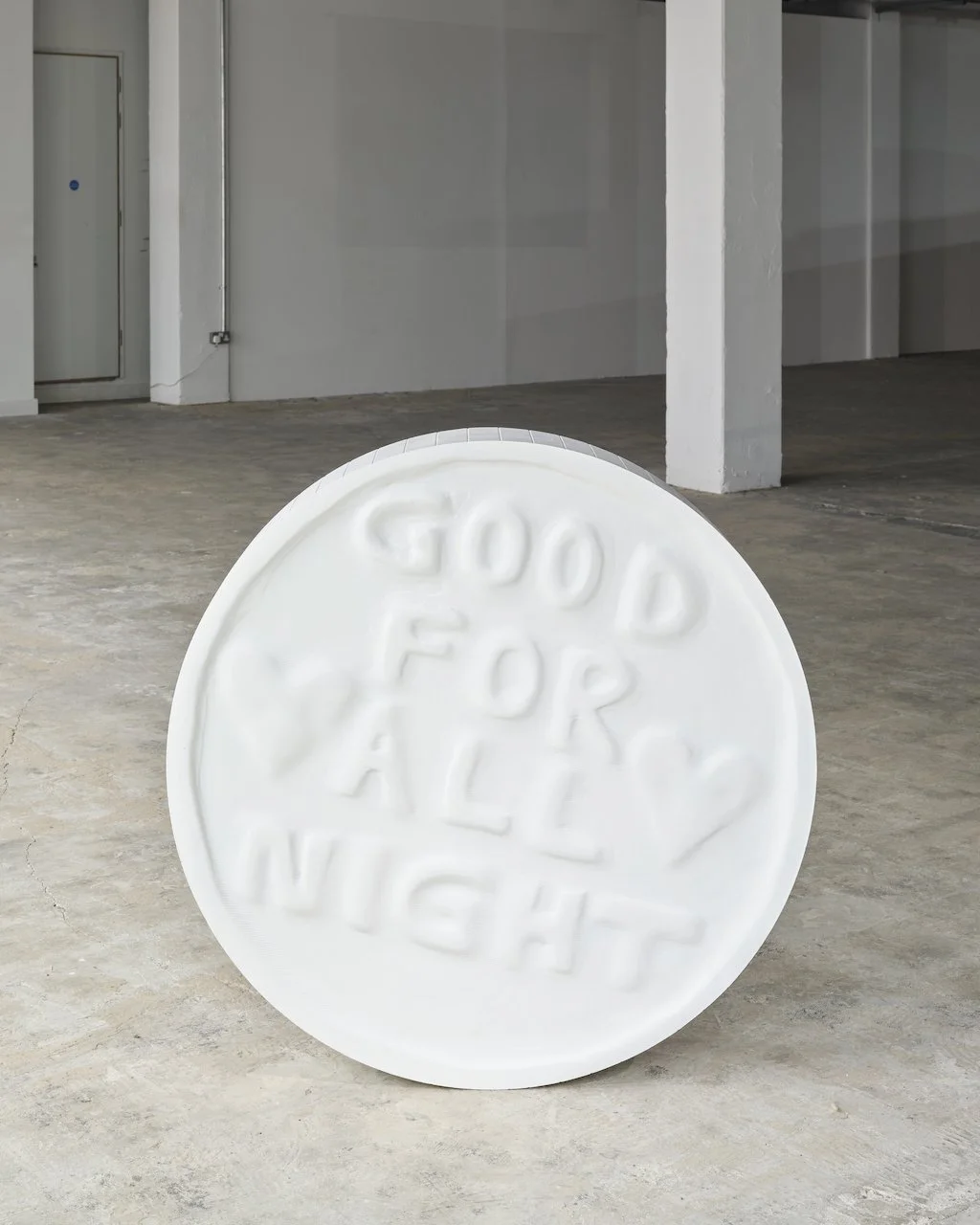
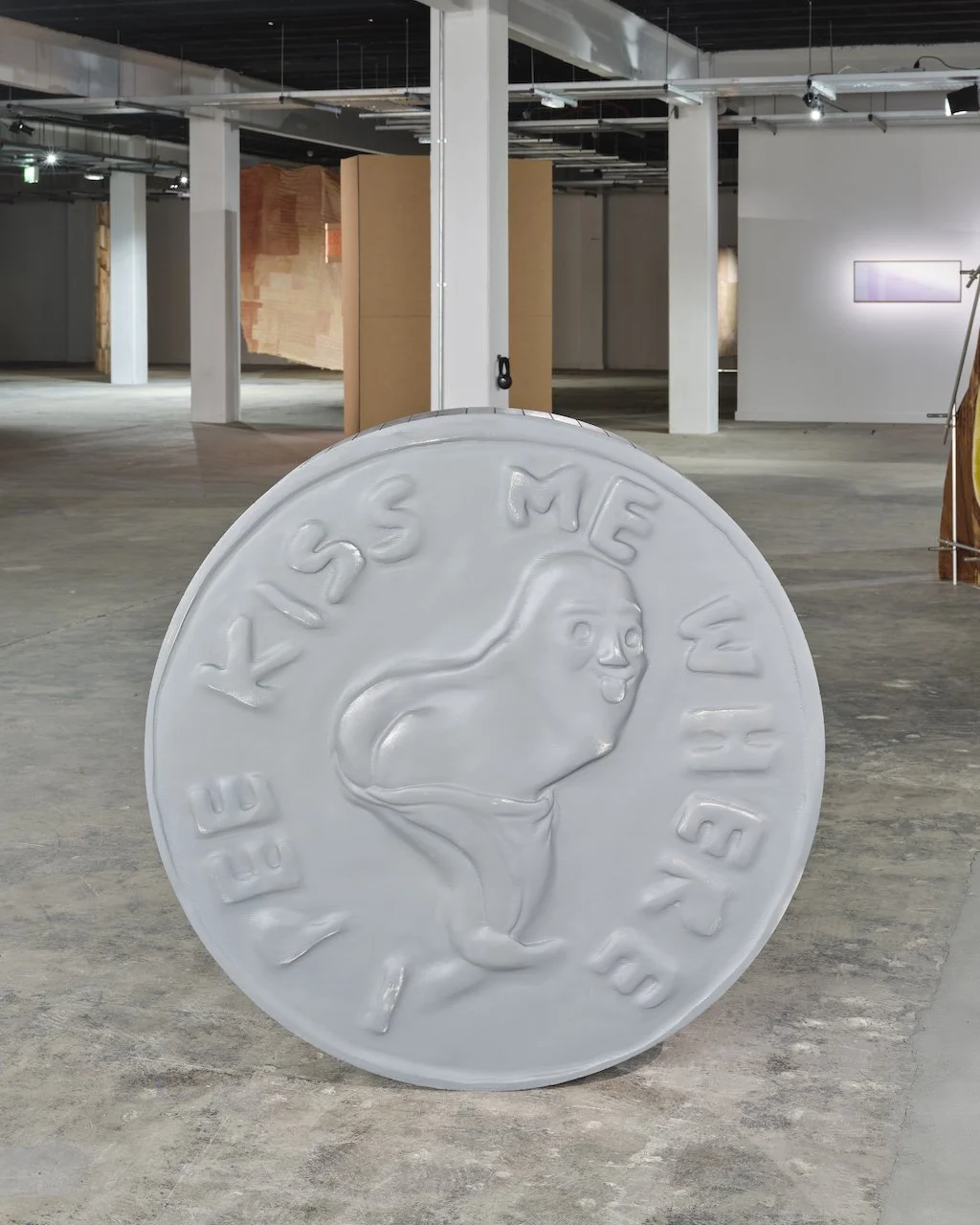
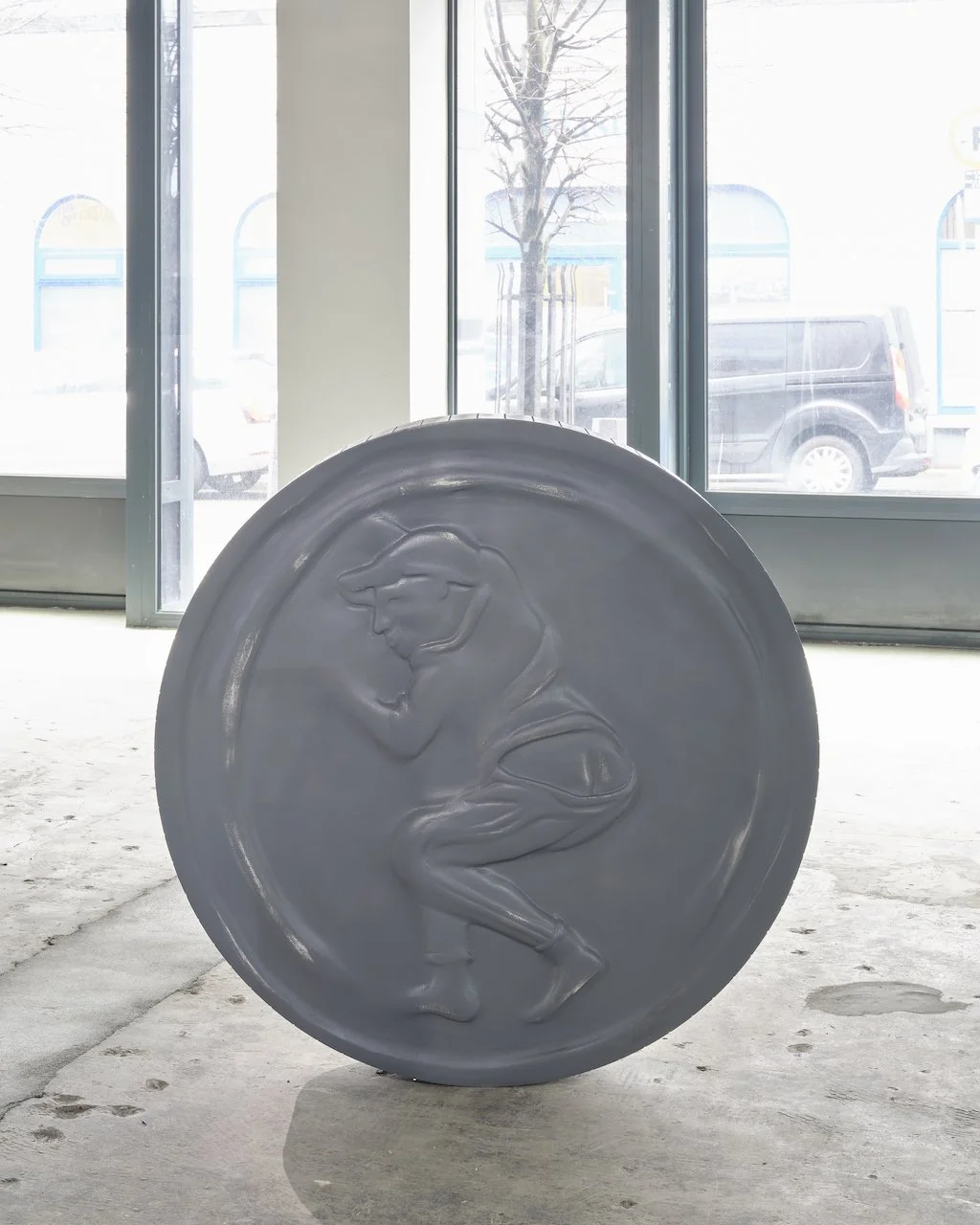
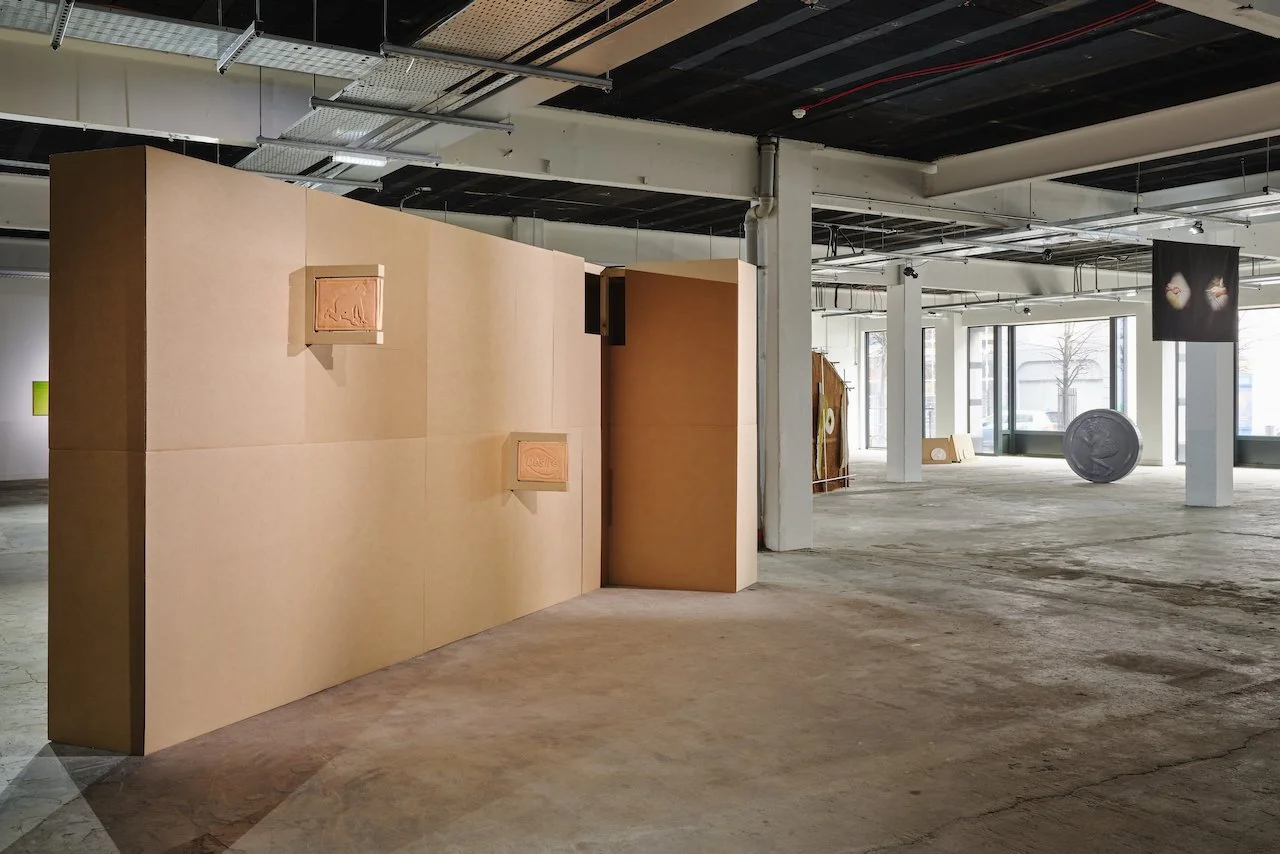
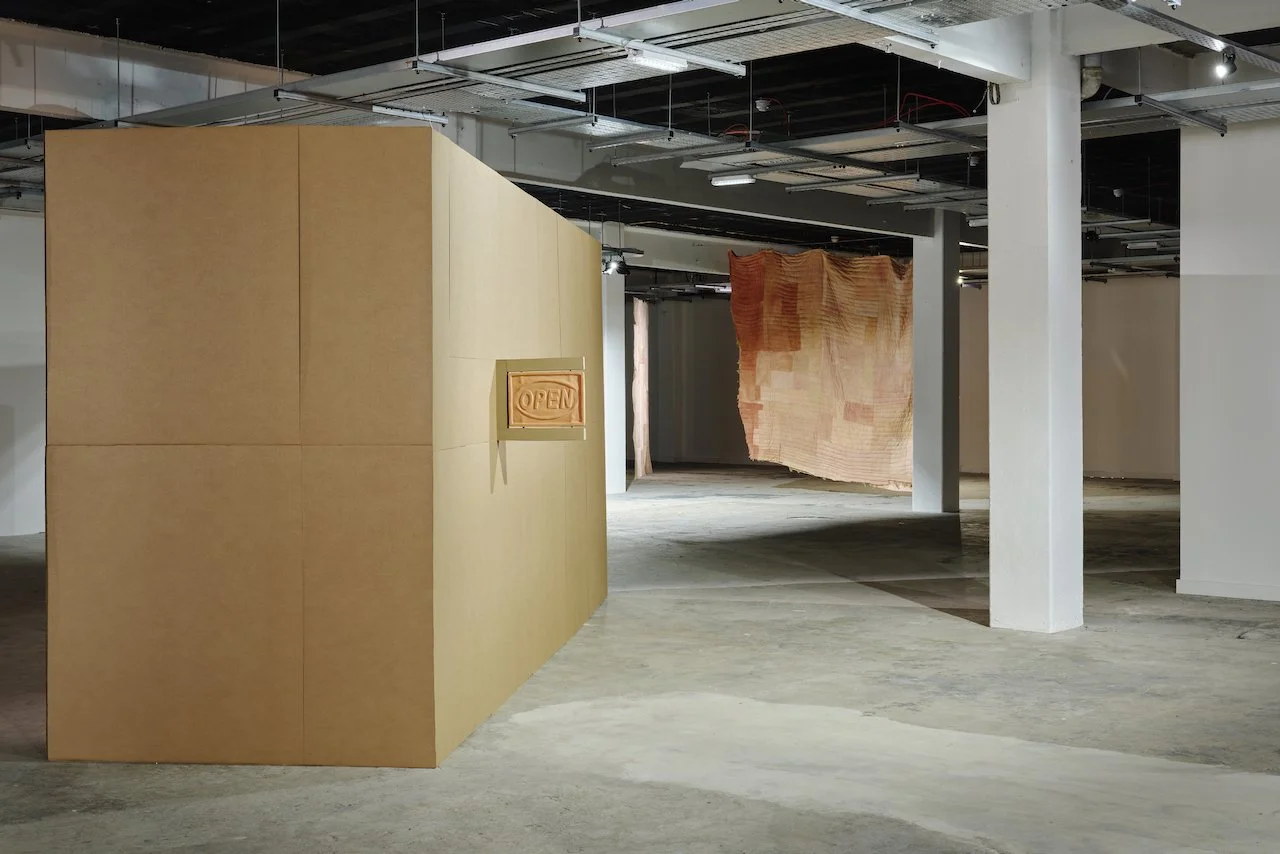
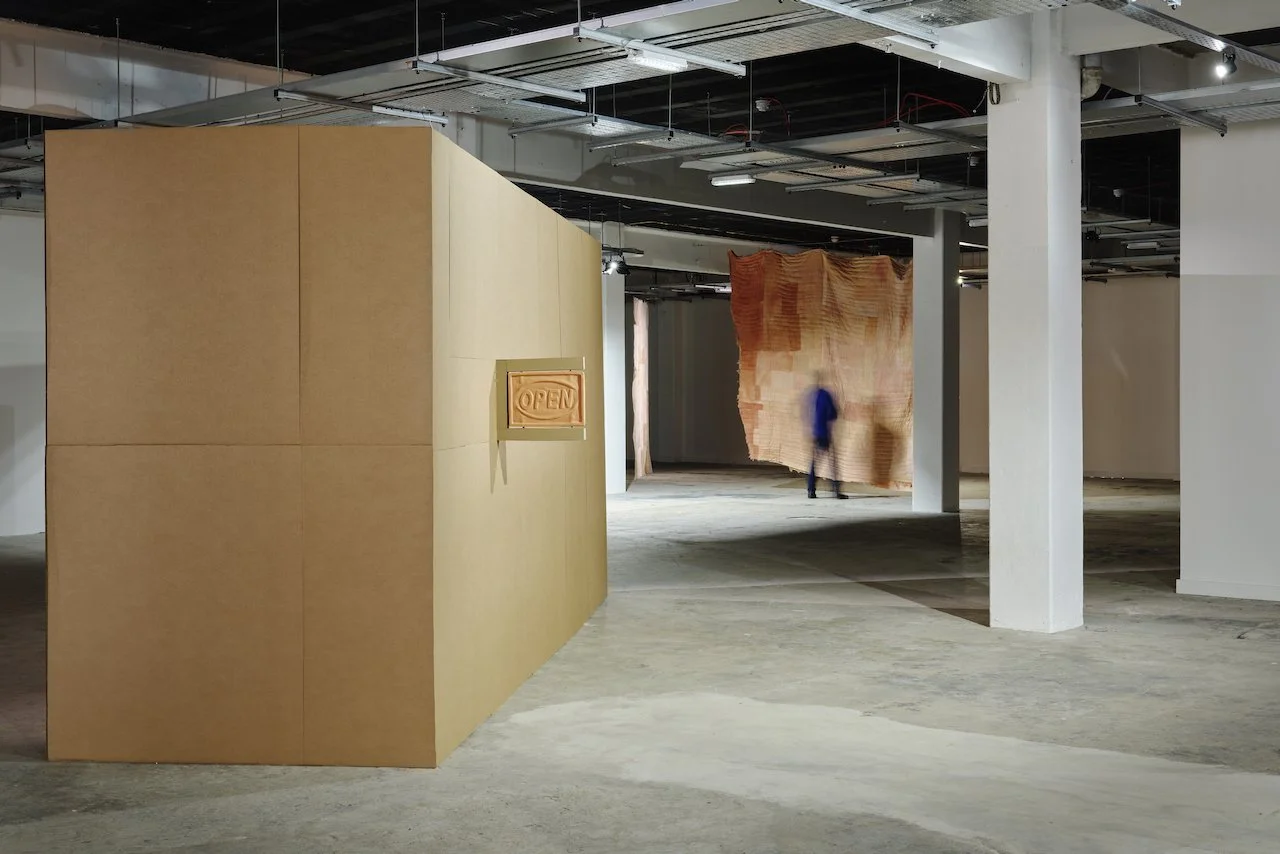
Within this exhibition, Seán O’Riordan presents large-scale sculptures that invite reflection on how the aesthetics of entry and exchange shape social worlds. The installation bring together hand-sculpted ceramics, wooden frameworks, and cardboard structures. Across their surfaces, fragments of text and figures in relief appear, co-opting the visual languages of commerce and ornament. Two coin-shaped sculptures, GOOD FOR ALL NIGHT and Fool I, transform symbols of exchange into sites of relation. Drawing from the histories of tokens and objects that once mediated entry into queer social spaces, such as bathhouses, cinemas, and clubs, the works trace how access has often operated through codes rather than sanctioned economies. Bad Tendencies, a freestanding wall structure that hovers between façade and threshold, supports a series of terracotta panels functioning as signage and wayfinding elements. Informed by queer histories of coded and discreet communication, these panels do not orient so much as guide viewers into deliberate ambiguity. In doing so, they also leave space for revision through misreading, opening possibilities for new vocabularies, within which alternative forms of value and recognition might emerge.
Bad Tendencies, 2025
Fired clay, cardboard, and timber
GOOD FOR ALL NIGHT, 2023
MDF and spray paint
Fool I, 2023
MDF and spray paint
Stillage I / Stillage II, 2023-2025
Ceramics and cardboard support
Jess Zamora-Turner
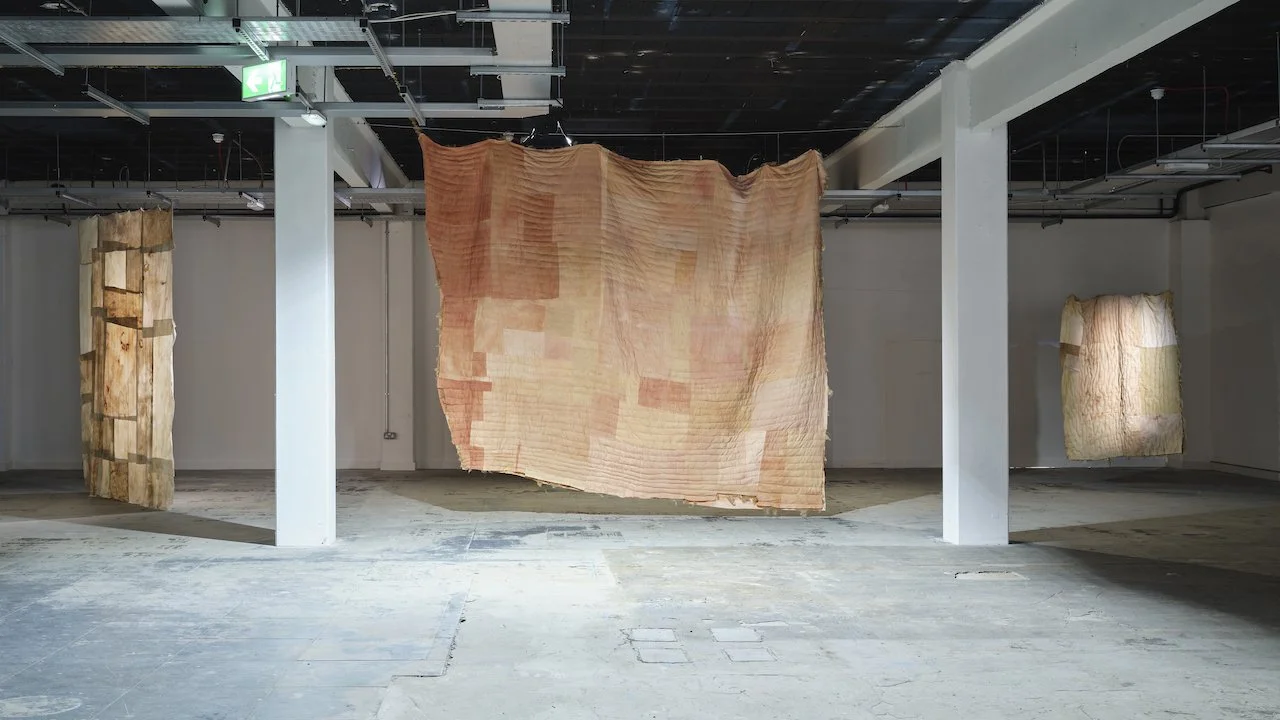
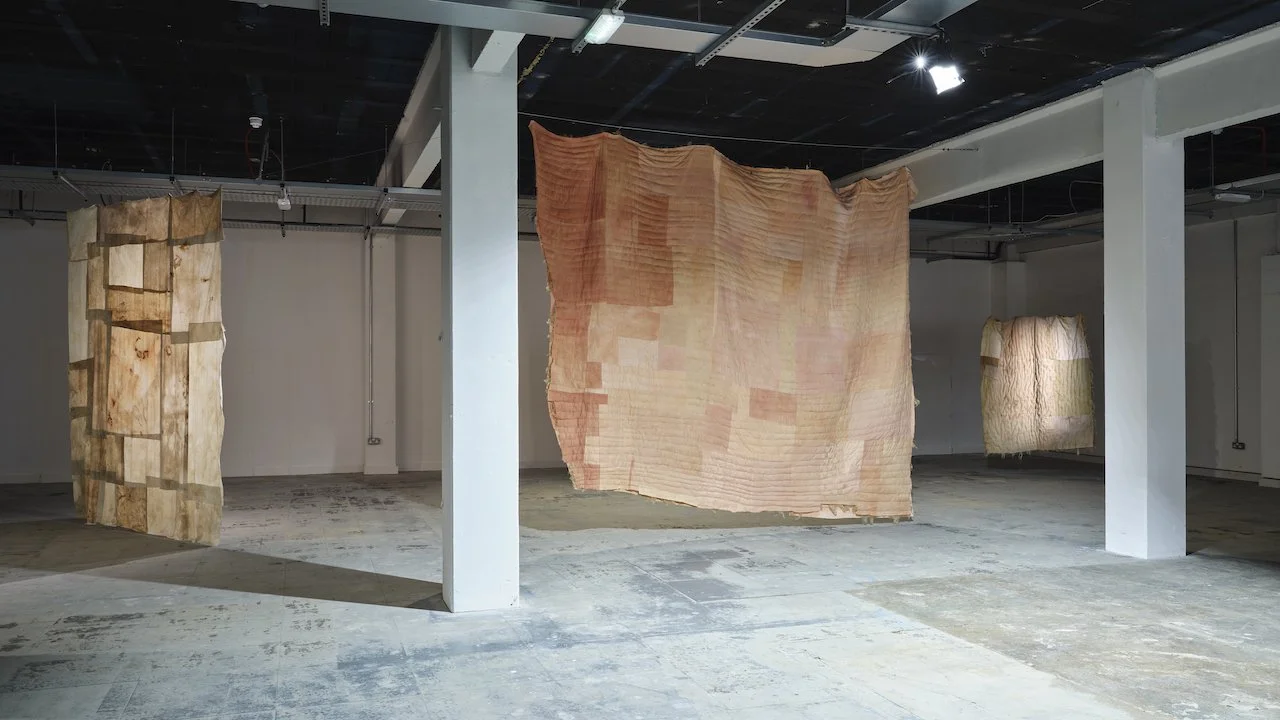
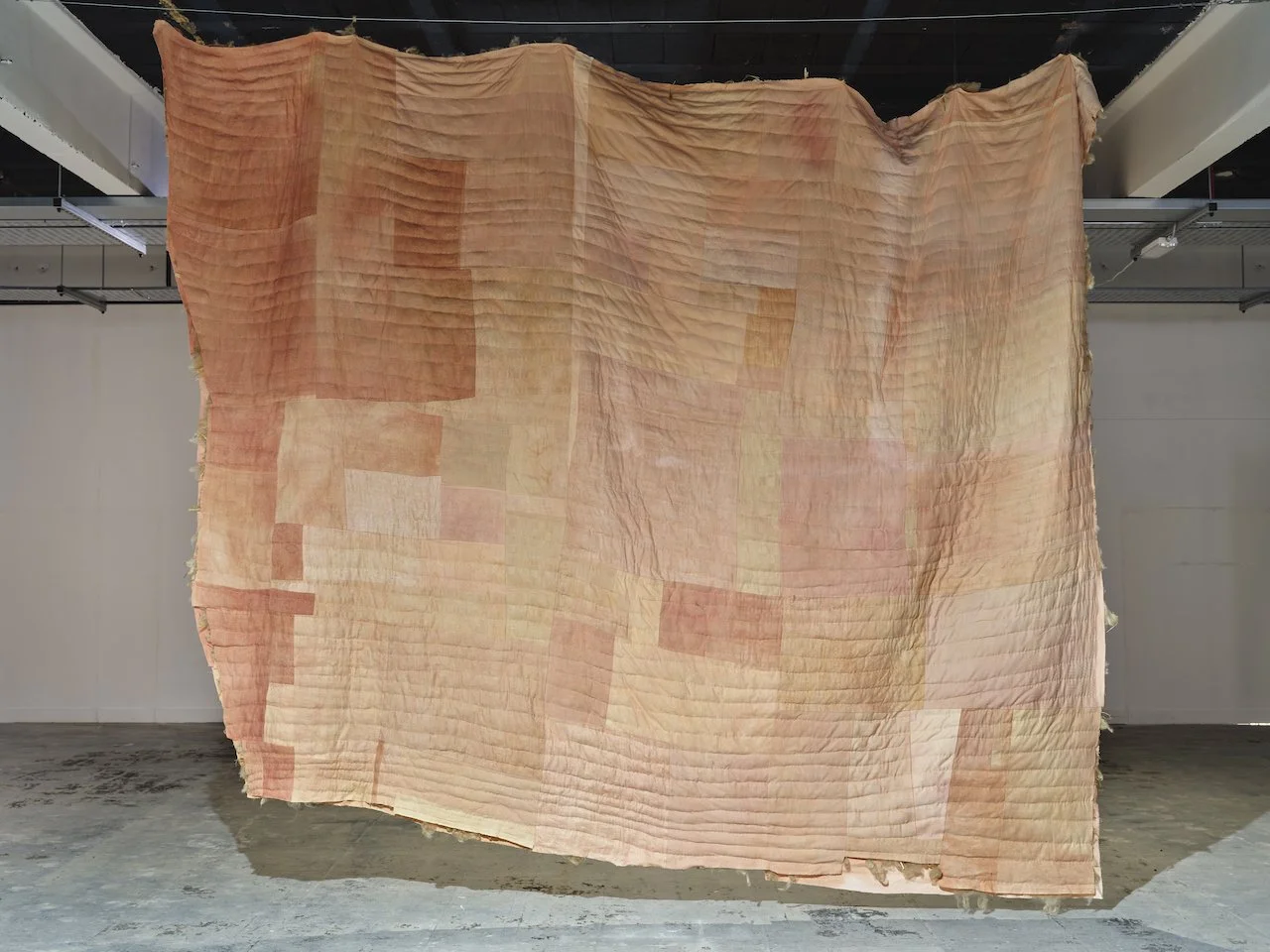
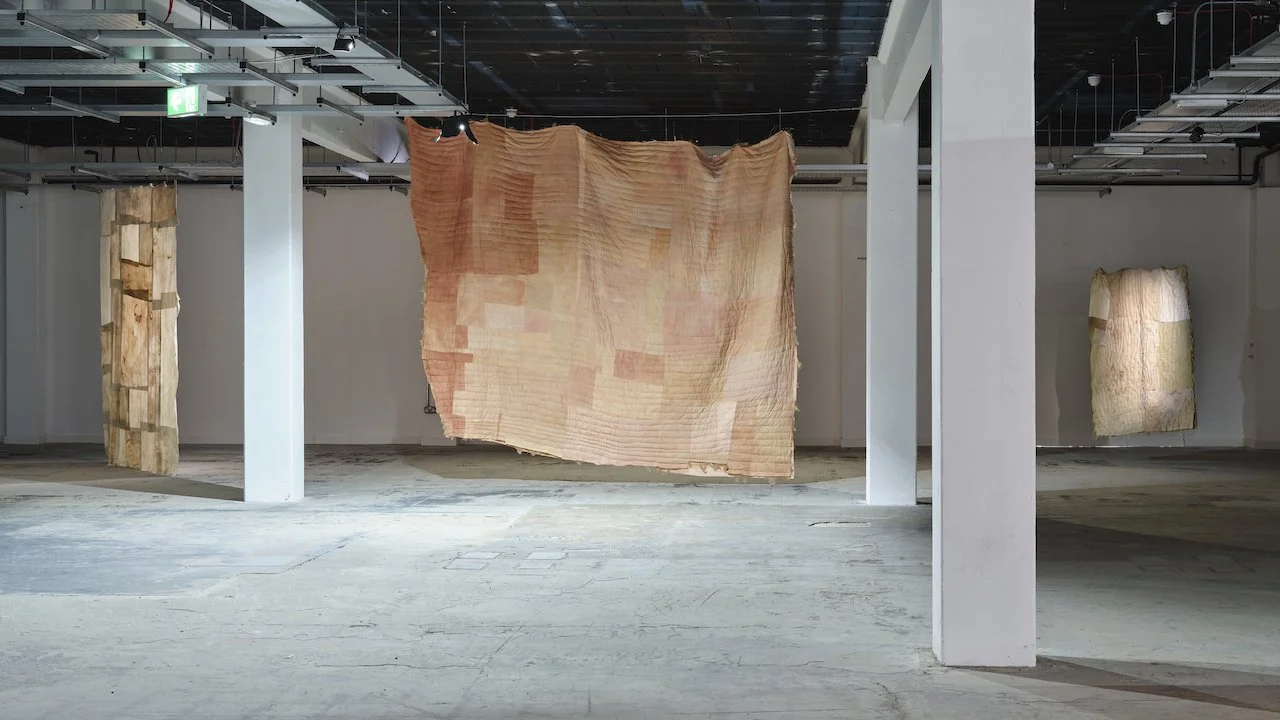
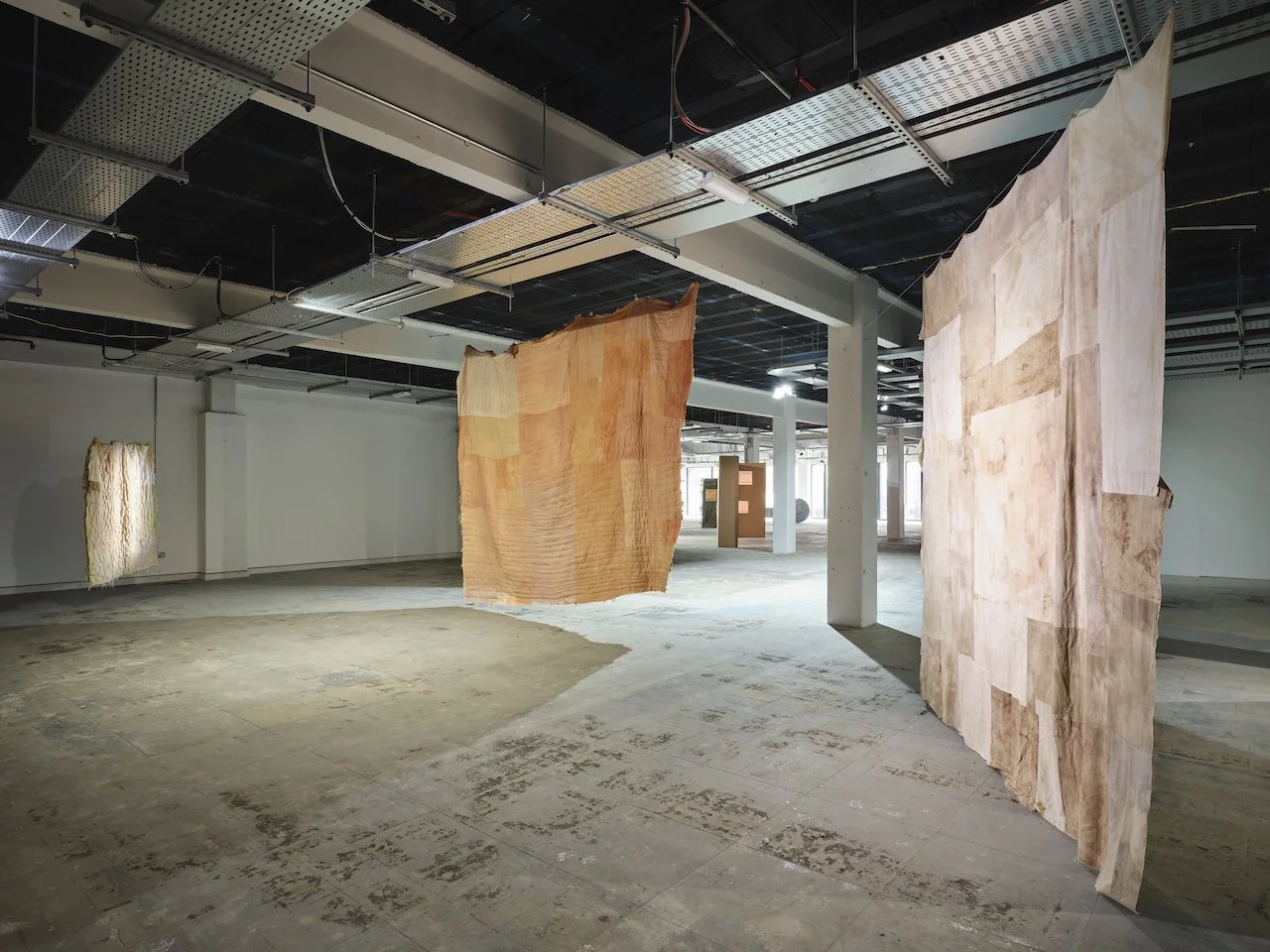
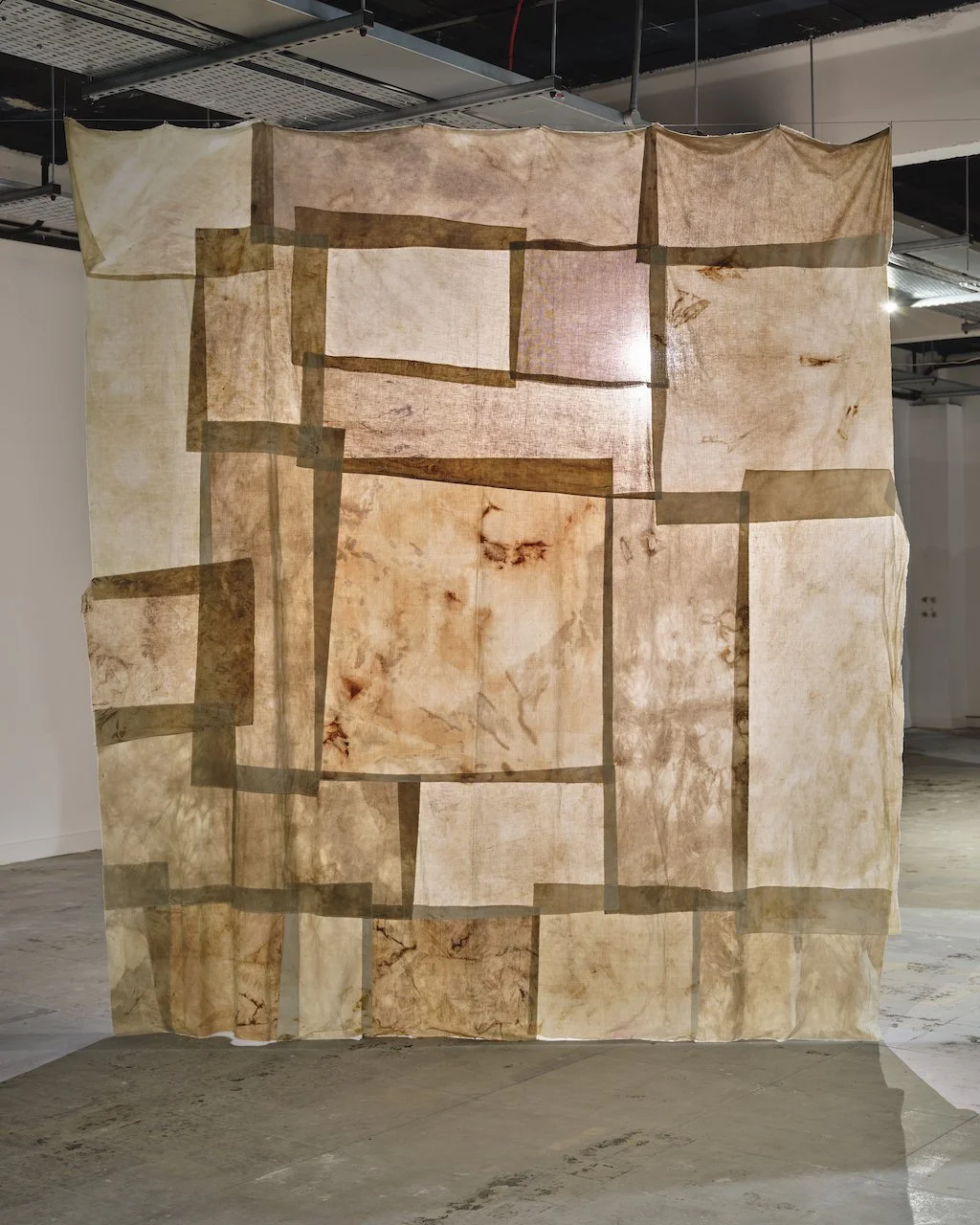
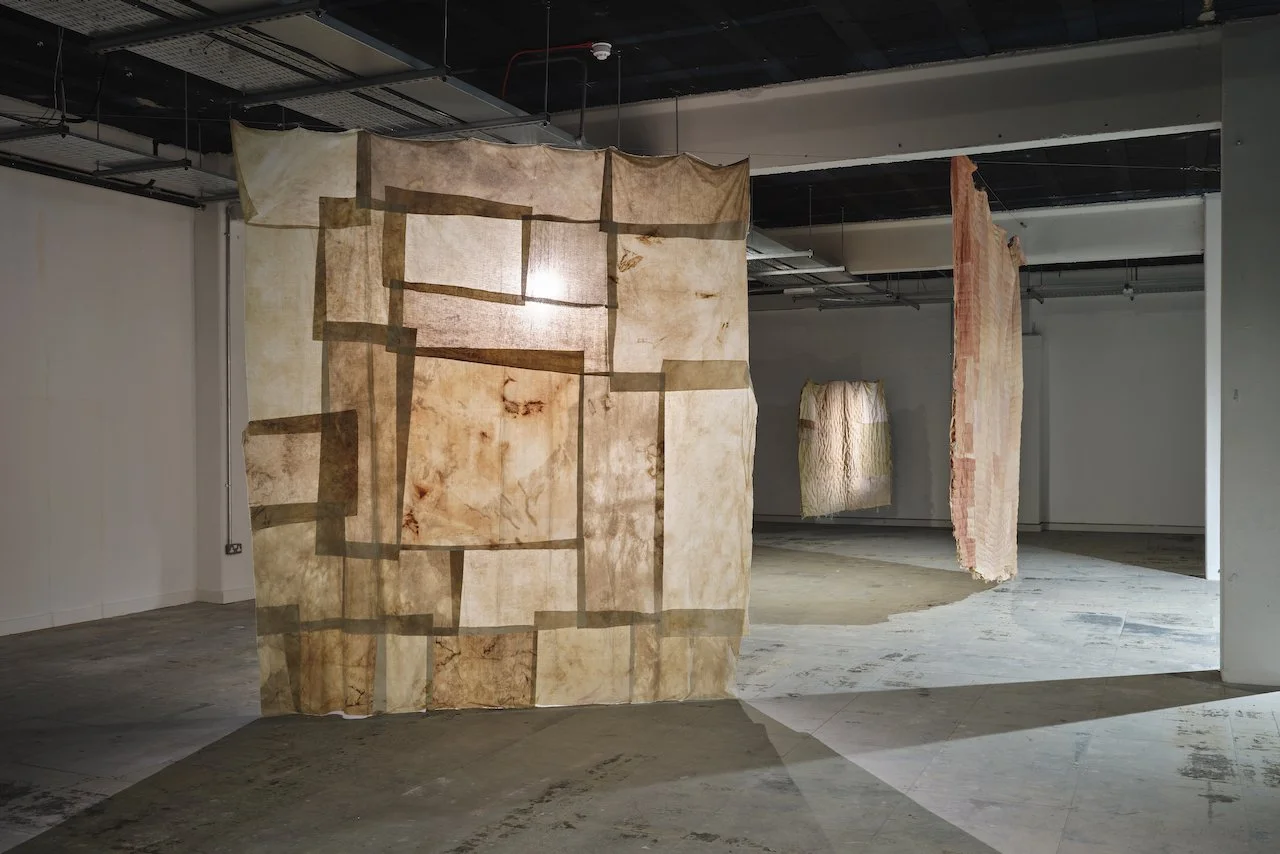
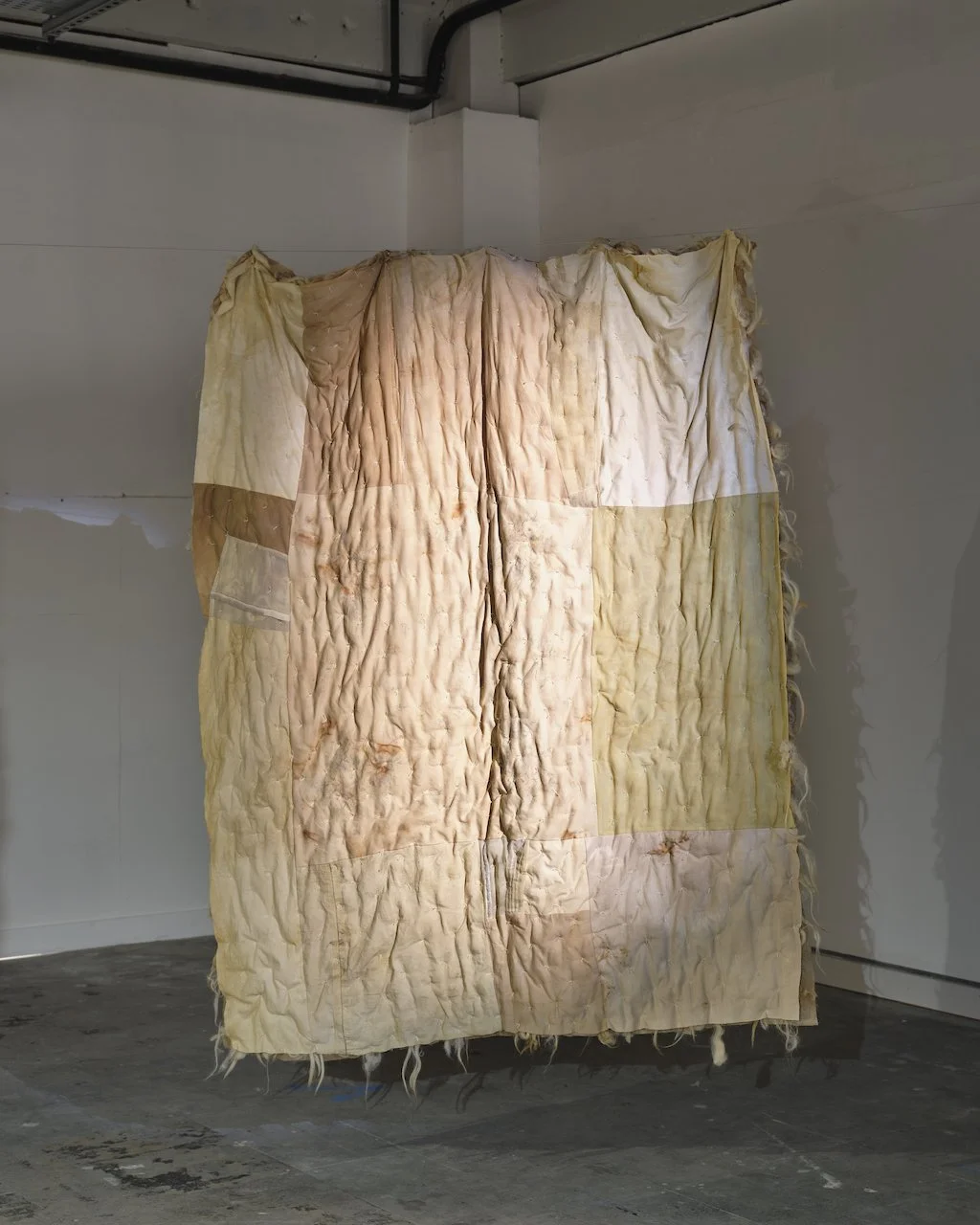
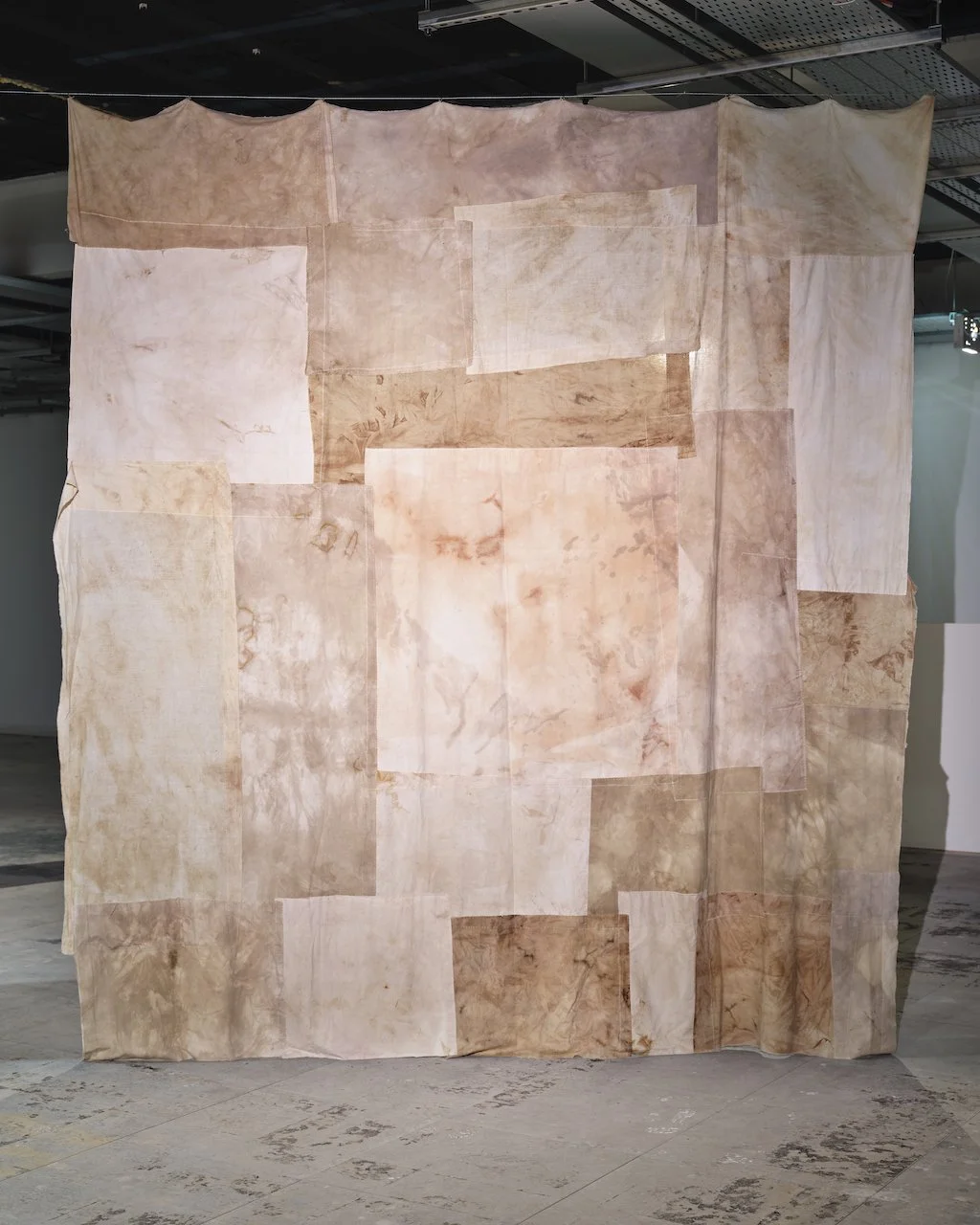
Jess Zamora-Turner’s practice is informed by years of seed stewardship and textile work on the Polish-German border, where she tends a small plot of non-speculative land, cultivating Andean foods and displaced seed varieties. Here, her work is presented as archives of distinct geographies, their cultural histories and their ecological landscapes – which she encourages us to see not as commodities but as companions. Three Sisters is a hand-quilted textile sculpture made from salvaged domestic fabrics and a delicate antique blouse. Embedded into its seams are heirloom seeds of corn, beans, and squash, the three main crops of various indigenous people in the so-called ‘Americas’. The quilt is an object of ancestral memory, named after a traditional companion planting method where the three seeds are planted together and sustain each other as they grow.
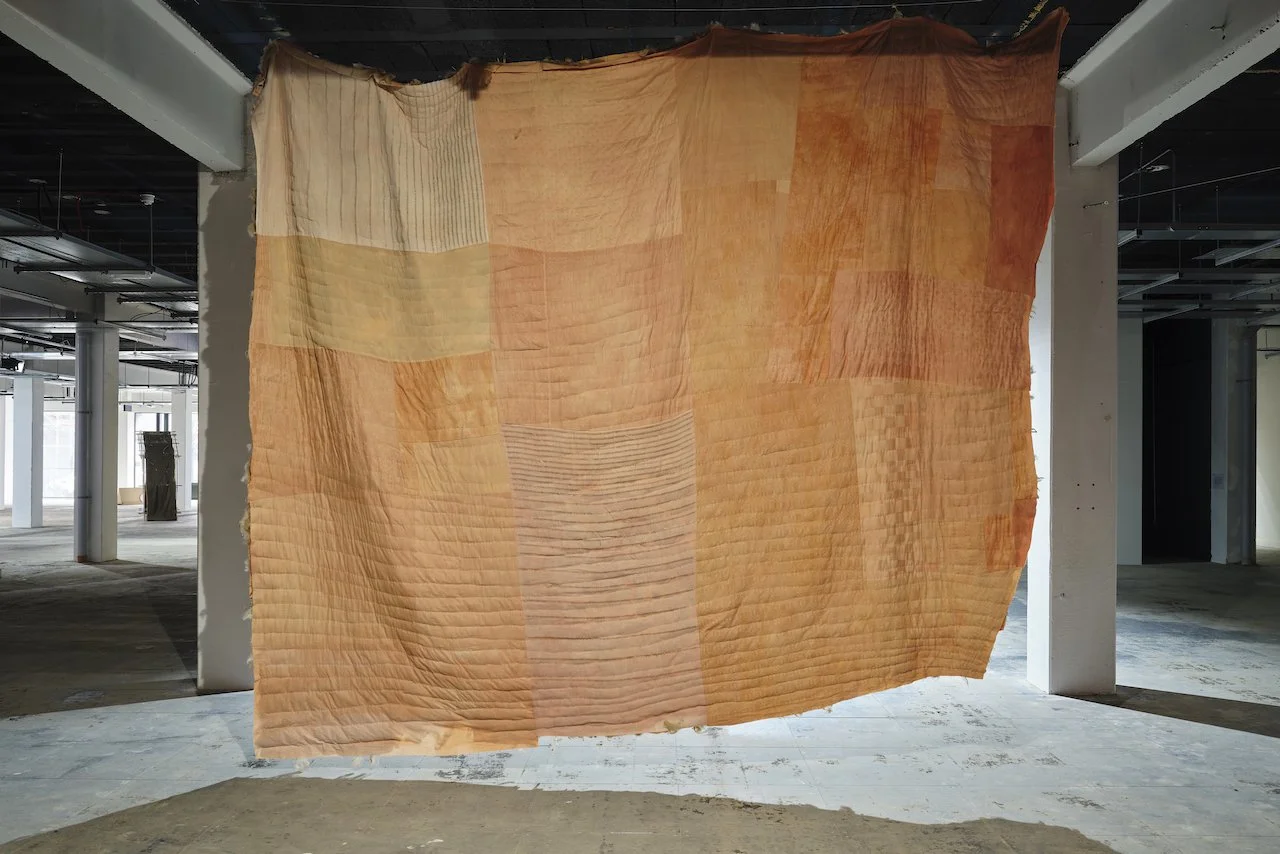
Large-scale quilt, Pisagua Blanket, is a soft and deeply personal commemoration of a site of immense violence. In 1973, the artist’s father was abducted and tortured in Pisagua before being exiled to Europe for nearly a decade. The work is an offering of repair and innumerable hours of handwork for a memory that remains largely unacknowledged in the national body. Postomia is a large textile hanging made in collaboration with the Postomia River in northwest Poland. Used bed sheets were submerged in the riverbed, absorbing sediment, agricultural runoff, sewage, and other seasonal flows. The resulting stains and markings reflect both the river’s organic life and its entanglement with ecological degradation.
Three Sisters, 2024
Naturally dyed, used domestic textiles and clothing, sheep’s wool, cotton thread, corn, bean and squash seeds
Pisagua Blanket, 2023
Cotton, linen, unwashed wool, straw, and thread
Postomia, 2023
Used bedding, cotton thread, river mud, and copper mordant
TULCA Gallery
Hynes Building
St. Augustine Street
Galway H91 R6WF
TULCA Festival of Visual Arts
Strange lands still bear common ground
Curated by Beulah Ezeugo
7-23 November 2025
Galway, Ireland
Video documentation: Jonathan Sammon
Photo documentation: Ros Kavanagh